
Tailor-Made
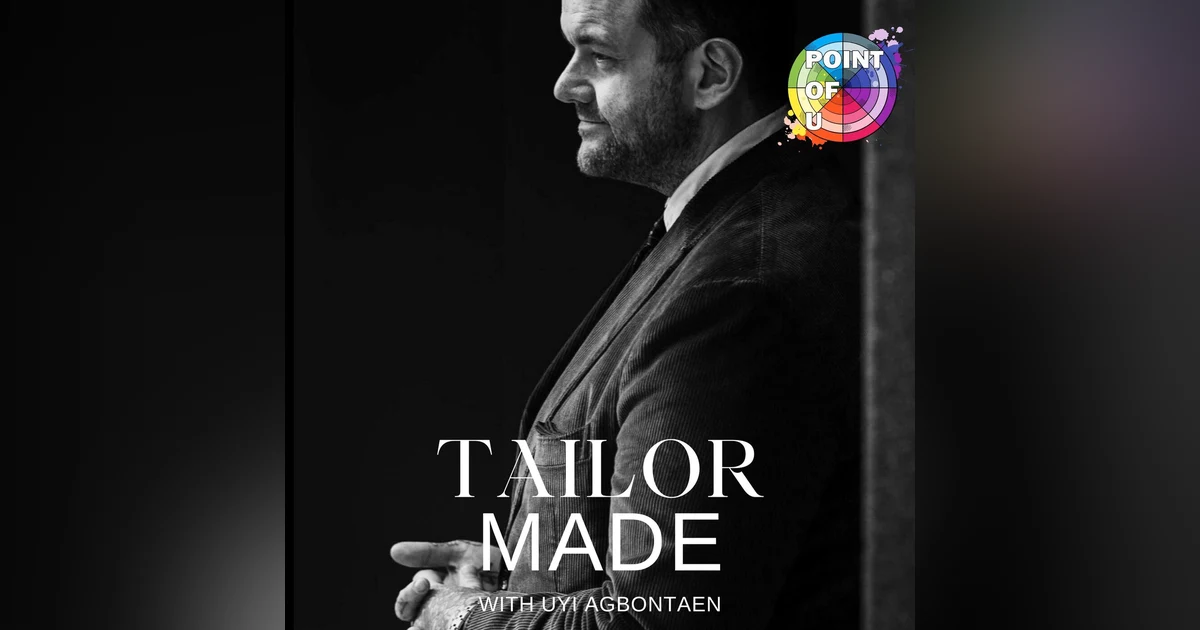
How many of us truly follow our passion in life to the career we always wanted or settle for what life has presented to us? In today's episode I sat down with gentle giant Benjamin Glynn- Phillips, a man who always found a way to fulfil his passions through his work. From running nightclubs in Wales and managing a punk band, to open a successful Tattoo shop, to becoming the manager of the iconic Saville Row menswear store Drake's. Ben now runs the prestigious Roger Gracie Academy HQ in London; we had an amazing conversation in which he talked me through this incredible story and his philosophy of seeking a way to do what you love.
When two conversationalist meets it makes for a great conversation!
https://www.instagram.com/benjamin_glyn_phillips/
https://rogergracie.com
https://admin.headliner.ai/tailor-made-mp3
Uyi
Hey, guys, uh welcome back to another episode of The Point of View. I'm your host, Guantan, and in today's episode, I am joined by Benjamin Glynn Phillips. I had a fascinating chat with him about what it means to find your niche in your passion following one of the nicest shows.
Ben
Fantastic.
Uyi
How are you, sir?
Ben
Uh i'm very well, thank you.
Uyi
Good. I've been thinking about this podcast. Right. I've been thinking about it a little bit because when I record podcasts, I don't really want to interview the person. I always want to have a conversation.
Ben
Yeah.
Uyi
Because I feel like it comes out better as a conversation. And then I know a little bit about your background. I was thinking you're quite an interesting person because you've changed careers a few times.
Ben
Yeah.
Uyi
But I was thinking about Virgil Ablow.
Ben
Um yes.
Uyi
A massive fashion icon, and he was a little bit of a polymath. He was very good at many things. If anyone doesn't know who this is, this is a huge fashion designer who did a lot of work with Kanye West, pretty much created a Donda Brand, went on to be the creative director for Louis Vuitton. Huge icon, DJ, design, cars, everything. Amazing person. And then unfortunately, he passed away quite early, uh yet too soon. A young talent, very influential. And I like the idea of being a polymer, being every man. People choose one path in life, achieves one route in life, and they stick to that. But they never explore, often other things. Whereas when I think of the Renaissance men, uh I think of people like Michelangelo DA Vinci. He's like, no, they did lots of things. They were scientists, they were artists. They were inventors. Thinking about what we were going to talk about potentially, I thought, wow, you've actually done um different careers and been successful in those careers.
Ben
I think it depends how you measure success. I certainly don't feel like I'm particularly successful. However, I feel I've had some amazing opportunities to work with some amazing people. And through that, I had crazy, amazing experiences, met people who are at the top of their game. I've always worked within my passions. I don't think I could work in anything else. I didn't go to University. I left school first chance I got, and I didn't really go that often before that. So for me to have any success in anything or achieve anything, I had to have a real interest in it because I'm not an academic. I'm not a conventionally smart person, but I kind of grew up hustling street smart. Someone always said street smart is something that stupid people use so they can call themselves.
Uyi
That's an interesting take on it.
Ben
Yeah. Always hustling, always doing things, always within the confines of things that I have an interest in, be that music or fashion or grappling or anything. There's always had to be a base of I'm really into this. Otherwise I don't feel I'd be able to do it. I couldn't do something that I didn't have a careful.
Uyi
Yeah, I think that's a good point. I think a lot of people probably do not follow their passions.
Ben
Yeah. And it's also finding your place in that world. So, for example, I worked in the music industry for a very long time. I can't play a note. I don't have any musical talent. That's why I sang in a punk band. But you find your way. So you start DJing, you start running nightclubs, you start promoting bands and tour managing, and you just find your way. It's like, I really need to be a part of this, but maybe I don't have the talent to be at the front running of it. You mentioned Virgil. No question. That guy is an amazing talent. But if you don't have that natural ability, but you still love it, you find your place. It's like the Wutang say, special uninvited guests came in for the back door. And I kind of feel that's me.
Uyi
That's a good point. Whether you're passionate about something or not, you've got to recognize your strengths and your weaknesses.
Ben
Yes. I've gotten to go on tour. I've gotten to travel parts of the world and see things that I wouldn't have seen otherwise. I always say to everyone, when I played in my punk hardcore band, we had a lot of friends who were in much more successful punk and hardcore bands. So we were always the support act. But because of our friendships with people and the Brotherhood we had, we got to play really big venues, but not because we were like this great band or sold loads of records. But our friends were Indigenous. The other side of it is I don't have anything else. I've had, like, these three or four interests in my life, and that's all I've got. That's the only knowledge I have. That's the only passion I have. So you have to make it work.
Uyi
So what do you define success as?
Ben
Um i certainly don't define success in a uh material value. Success to me is being comfortable, having a happy life, not having too much stress. That's success to me, listening to John Call Train on a Sunday morning, reading the paper with a cup of coffee, that's success. Spending time with your wife, for your uh family, your children, your loved ones, that's success. But when I say success, I mean in a more material aspect, like, I've never been financially rich, uh but I've been rich in experience and rich in friendship. And these things, which obviously are realistically.
Uyi
More important, I think they are. I think I was having a conversation with someone who we both know who's younger than me and you we're talking about, what does it mean to be rich? And I said, Obviously, there is a financial wealth. Of course, everybody knows what the balance of their bank account is. And some people have a very healthy looking bank account and some people. Not so healthy, right? But in my mind, that's not wealth, that's not richness. True wealth is the family that you have, the friends you have your own health of body, health of mind, the experiences that you're able to live. That's true wealth. 100%. Because you can have a lot of money and can still be lacking in things if your child is sick.
Ben
Doesn't matter.
Uyi
It doesn't make any difference. You can have all the money in the world and you may not be able to do anything about it.
Ben
Not naming any names, but when I worked at Drake's on Savile Row, I had a client who was one of the richest men in the world and not wanting to give too many deals with it, but he suffered a tragedy and two of his children died. Now, that man would give anything to have his kids back. I know that for a fact. His proud father a really nice man, very obviously, incredibly financially successful, but he was a good guy. And yet it doesn't matter. It doesn't matter at that point. Uh no, uh it doesn't.
Uyi
Money does do is it allows you to be comfortable. Comfortable doesn't make you happy, though. No, comfortable is nice.
Ben
But don't they say, isn't there? I'm sure this has gone up, but I remember reading once there's like a figure that if you earn over £80,000 a year, it's diminishing. Once you've bought that first car or that first nice anything watch or whatever you want to spend on that. When you buy that second nice watch or nice car or nice suit, the return is diminishing. So it gets to a point where, yeah, you might have 100 beautiful vintage Aston Martin, but the reality is you only actually need one.
Uyi
And I believe that it's the problem of materialism.
Ben
Yeah, very much so.
Uyi
Materialism is very temporal. It doesn't last.
Ben
And I've got to be honest, I've been a victim to it, especially when working and tailoring, working on Savile Row, uh dealing with people of great wealth and your ability to monetize reality is it gets a bit morphed. The prime example is when I first started working at this place, a guy came in and we had two jackets with a very similar fabric, and he was looking at them going, I can't decide which one to get. This one is great, but like this as well. And he said, you know what? I'm going to get them both. And they were over £1000 each for like an off the peg jacket. To me at the time, having just moved to London, being from South Wales, it blew my mind. I'm like, this guy is insane. He's just spent £2000 on two TV, identical jackets. It's crazy. And by the time I left that place, people would come in and spend £20,000 and it wouldn't even ban a little bit to me. And because you're around that all the time, you somewhat lose the value of money. Because you're like, oh, it's only a few thousand pounds. It doesn't really matter. It does because you're not earning the same as all these people. My wife would always say to me, you live a champagne lifestyle on lemonade money.
Uyi
I don't think you'll be the only person who does that as many people.
Ben
Yeah. So there's this strange thing where because you meet these people and you get on, you get invited to things. And at that point, there wasn't a members club in London that I couldn't walk into and you're sitting down and having dinner with heads of industry and politicians and things like that. You work on the shop floor like a retail guy working in a really beautiful shop. That sounds amazing things. But the fact remains you're still working class.
Uyi
That's true. Speaking to the people in those circles, uh did you feel that their mindset was different to the average person or did they still have the same everyday problems?
Ben
I think they've still got the same everyday problems. And there's this weird sort of juxtapose there where these guys, a lot of them kind of wished they were us. They all loved the clothing and they, for lack of a better word, thought we were all really cool.
Uyi
I've been fortunate, like you, I've been fortunate to have some amazing experiences and see people from all walks of life. I've literally met royalty, literally stood in front of heads of state, literally. Where I grew up in inner city London. I went to a very working class school.
Ben
But people are people 100%. And I think everyone has their problems as well.
Uyi
This is the thing having money makes you realize, because when you don't have money, your problem is money.
Ben
Yes.
Uyi
But when you have money, you realize, I still have problems.
Ben
It is different problems. The worst thing to happen to you in your life is still the worst thing to happen to you in your life compared to other people's problems or troubles might be minute, but to that person still terrible.
Uyi
It's relative to that person very much. I recorded a podcast with someone we both know, Gill Out, who's a good friend of mine, and he worked in the financial sector for many years, really successful. Works in New York, Paris, London. And he said, listen, where do you lose? I'm sure you saw people making incredible amounts of money, but I'm sure you saw people losing money as well.
Ben
I saw people lose a lot of money.
Uyi
Yeah.
Ben
I saw people ruin their life. And it doesn't have to do with the amount. It's just like when you lose everything, whether that everything was 100 grand or 100 million, it's a very, very dark place to be. And I've seen it.
Uyi
Um if that's all you've got, it's a big deal to you.
Ben
Yeah.
Uyi
So first talk about your career.
Ben
I started off sort of in music.
Uyi
Okay.
Ben
Really? That was the first thing was all music.
Uyi
Your passion or was it punk?
Ben
No, all music. So the pivotal moment in my life was a lad from down the road, his name was David Hayes. Showed up at my house with two tapes, Guns and Roses, Appetite For Destruction. And he put it on and it blew my mind. I was like, oh my God, this is amazing. And then the next tape was NWA, straight out of concert. And I was just like, oh my God, what is this? I think those two records are like the base of my entire life. So there was always hip hop, there was always rock. When Nirvana happened, I was like 1213 and that just opened the doors. Not necessarily any three of them. My favorite records of all time, but those were the three records that made a difference. They changed the root of my life. So basically I started DJing a bit. Then I started working on The Doors and clubs in Swansea, started doing some promoting. I was part of a collective uh called Independent Promotions. And between us all, we pretty much ran nightlife in Swansea. Some of the best nights there, some of the most amazing music. It was fantastic. We were all friends and we all just loved music. Through that. I ended up meeting some people who played in bands, did some tour management, just anything to get a little piece of that kind of through that world, kind of got into the tattoo world. And again, this comes back to what I said earlier about finding your way to be a part of something I can't draw to save my life. So I wasn't a tattooer. I had some really great friends who were exceptionally talented. Tattoos still have. They're some of the best guys in the world through them. A friend of mine, Dante, he had a company selling tattoo supplies and he said to me one day, look, you fancy me giving you like a bunch of tattoo machines and you go out and see if you can sell them. So he gave me, I think like 1520 tattoo machines. And he said, now that will last you like a good month. And I sold them all in two days.
Uyi
So you are a hustler.
Ben
Always. So he kind of showed me the ropes and I started this tattoo supply company, traveled all around Europe selling tattoo supplies, inks, needles. You can't get dental in Europe.
Uyi
Oh, really?
Ben
Yeah. No, I used to sell dental for about €15.
Uyi
Are you serious?
Ben
Yeah.
Uyi
Why?
Ben
I don't know. For some reason at the time um you just couldn't get it. Obviously, dental for sterilizing is great. So after that with my friend Lee, I set up a tattoo shop and every uh morning I would take a cup of debt or I would pour it on the mat as you walked into the shop. So everyone who walked into the shop, it smells so clean, so surgical. And it was. Yeah, but what they were smelling was this cap of doubt.
Uyi
It's very smart. It's kind of like when you walk into a supermarket and you smell the bread all the way at the back.
Ben
Yeah.
Uyi
So you did a lot of traveling?
Ben
Yeah, I think there's a period of about a year and a half to two years.
Uyi
So how did you get into the punk scene again?
Ben
Like I said, Nirvana was a very pivotal record. And you kind of read interviews. I was obsessed with music. So I'd buy every music magazine and you read interviews with Kurt Cobain, and he says, well, this band Black Flag really influenced us. And I was like, all right, I'm always like one of those guys, if I find music, I want to trace it back to its source. Say, for example, like Metallica as a teenager, what made them sound like that? And then you kind of trace it back and you find, like, Sabbath and all these other things, going back to Delta Blues and even going back further than that, like field recordings of, like.
Uyi
Workers or a chain gangs.
Ben
And it's beautiful.
Uyi
Deep South America.
Ben
Oh, my God, the song is fantastic. Obviously, these guys going through hell every day, but their voices are amazing.
Uyi
That is the roots of a lot of modern music. One, the Church, the gospel music, and two, the chain gang, which a lot of people don't realize. We talked a little bit about this before, because obviously when people think about rock today and they think about punk today, uh they don't look at the roots. I think what they would be surprised is there's a lot of black roots.
Ben
In that music, I told you. But the example I used to everyone, hardcore punk was invented by a bank of the bad brains who are four rasterians from Washington, DC. And they took that thing that, like the Sex Pistols and the Clash were doing, and they made it faster and they made it harder. And the singer HR was like the greatest front man of all time. He was amazing. Sadly, like, a lot of these things, they never got what they deserved. Yeah, they should all be multimillionaires. Everyone should be thanking them every day for what they did.
Uyi
Then we talked about Scar being the roof punk. We talked about the Blues. We talked about the original rock singers, the BB Kings, the Muddy Waters, the Chuck Berries, influencing Elvis and influencing Black Sabbath and Pink Floyd and the Rolling Stones. People see the end product today, and they don't actually associate at all. Actually, this music was massively. A lot of black music that crossed over. In fact, it wasn't acceptable.
Ben
But you have to go back to the roots. You need to know your history. Yeah, because there's so much good music. You listen to, like Muddy Walters, you listen to all these things. It's just crazy. I listen to a lot of country music uh like Hank Williams, and it's the same those guys have got the Blues. Fantastic music.
Uyi
What are you listening today?
Ben
One of my favorite singers is a guy called Mark Lannigan who sadly passed away quite recently and I think he just has the most phenomenal. He told me a voice that's got the Blues, he's got the Blues. He had a really terrible life with addiction and you can really kind of hear that. But he was a very prolific artist so he was in the bank with Screaming Trees and released like a bunch of records and he's done a bunch of solo stuff. He's a bit of like a musician's musician. So he collaborated with people from Queens of Stone Age to Moby to like obscure underground electro. Uh i made a little playlist of all the stuff that he guessed it on and then also it's a record that came out ages and ages and ages ago. But the first album by justice uh who are like a French electro band. Apart from that, I can't sound like an old miserable bloke, but I kind of listened to older stuff. Predominantly. I listened to the stuff I listened to as a teenager and predominantly stuff that came before that.
Uyi
I mean I'm getting older. I don't know, she has to give my opinion. I don't think all these young kids are like, what are you talking about? The reason often people like to listen to older stuff is because the older stuff stands the test of time.
Ben
There's another thing though, we're around the same age, we're not meant to understand what these 17 year olds are listening to. We're not meant to.
Uyi
Yeah. My dad is a huge music fan like you and had like eclectic collection of albums. He would play music all the time from Afrobeats Fella, Kuti to Black Sabbath and Pink Floyd. I had a big sound system. I remember it vividly and I didn't appreciate because I was into hip hop when I was a kid. I was into like you NWA, I was listening to later on the Wutang Clan. I was listening to Biggie, so I didn't appreciate what he was playing. But now I'm older, I like to listen to what he played. Do you relate to that?
Ben
Well, there wasn't a lot of music played in my house. Oh, really? No, we had a record player in the house but there wasn't a lot of records and I can't remember ever really talking to uh my dad about music or anything. I would like listen to my mum play the piano, which was great and I can remember about the records that they had there being like a few things that hit me like the Jimi Hendrix Experience. But it wasn't even like a Jimi Hendrix album. It was one of these hits of the kind of listening to that. But the three Jimi Hendrix songs were the ones that kind of spoke to me. It wasn't really anything else that spoke to me and none of my siblings are particularly into music, so I don't know where it came from, where it comes from, but it's been the most important thing in my life. Really?
Speaker UNK
Yeah.
Ben
And then kind of getting into punk and kind of hardcore stuff. What I loved about that was the kind of closeness. Your first gigs tend to be bigger ones. So I'd seen the Metallica and Guns and Roses of this world. And then someone says to me, oh, there's some bands playing in the basement of this pub, and uh you go and um see that, and there's no barrier. There's no distance between you and them. And the energy is there. It's not as polished and it doesn't sound as good, but the atmosphere and the rawness of it is just insane.
Uyi
But I do believe that if it's that good, it gets remembered, which is why I think people do go back and listen to old tracks, because the ones that get remembered are just groundbreaking.
Ben
I often think about this current thing where everything's just there. Do you feel it devalues the music?
Uyi
Because now we're in the Spotify generation. It started with the itunes generation. We moved on. Obviously. Now there's a lot more material at your fingertips. You have your phone, there could be a thousand albums on that phone, and there will be a thousand albums that you've not even heard of, and you can listen to them, which is great, amazing. But what there is the pub and the small club experiences that's not there anymore.
Ben
And for me, one of my all time favorite bands is a band called Black Flag. I think I mentioned earlier. I read, like, Kurt Cobain talking about.
Speaker
Them, and I was like, I've got.
Ben
To check this band out. So I wrote a letter to their record label, and I sent it off to Los Angeles with, like, an international reply coupon. And I was like, Can I uh buy a record? Month or so later, I get a little leaflet in the post saying, hey, Ben, here's a list of what we have. And I ordered Black Flag Damaged. So I get this record in this band that all my heroes are talking about. I put it on, and I'll be honest, it sounds terrible because the production is kind of terrible. The playing is kind of sloppy. How are all these bands that I love kind of into this? This is awful. But it took me about six months to get this record from the initial letter. This is a time when your post to the stage took, like six weeks or so because I was like, I'm listening to this record. I listened to it, I listened to it, I listened to uh it, and I loved that record. And I feel that maybe if I had just gone on Spotify and press play and gone, oh, no, this isn't.
Uyi
Really you could have just passed quickly.
Ben
Yeah.
Uyi
Even though I grew up during this time and so did you. But we were young, Ben. I wonder what it was like as an adult to put on an album by NWA and listen to Fuck the Police all the time, because it's different being a young kid listening to it. Have you seen Almost Famous?
Ben
Yes. Crystal and Green Rooms. I think Almost Famous especially.
Speaker
God, it's going to get ugly, man. They're going to buy you drinks, you're going to meet girls. They're going to try to fly you places for free, offer you drugs. And I know it sounds great. These people are not your friends. These are people who want you to write sanctimonious stories about the genius of rock stars, and they will ruin rock and roll and strangle everything we love about.
Ben
I've only watched Green Room once uh because it's a bit intense.
Uyi
It's very scary.
Ben
Yes.
Uyi
Patrick Stewart, but it's the band experience as well.
Ben
Yeah. I've been on tour in the States where you play some crazy places.
Uyi
All right. What do you mean? Like crazy can't leave us.
Ben
Where there's a lot of Banjo's played, people like moonshine, people are spitting tobacco on the floor. And there's, like, these biker uh girls I've experienced that obviously never really in a negative, but just people who are different have a different upbringing, a different way of life. And again, we've all come together through, like, a love of music.
Uyi
Yeah. Obviously, America is a huge country and it's such a diverse melting pot, but at the same time, it's almost like a silo. Like America's isolated.
Ben
Yeah.
Uyi
Because they're so big. Why the hell do they need to know about anywhere else?
Ben
And having traveled in America quite a bit, it's so different. Like, New York is not the same as Chattanooga, Tennessee. New York is so different to La is so different to Chicago.
Uyi
It's like going to different countries.
Ben
Yes, literally. And you've got to think all these States are, like, bigger than the UK. Florida is bigger than the UK. New York is closer to London and Los Angeles. It's so vast, man. I've met some amazing people on the road there.
Uyi
A lot of Americans have never traveled out of America because it's fucking huge. You could just travel within America and it's like going to a different country. Anyway, I think it was Mark Twain who made this quote.
Speaker D
Travel is fatal to prejudice, bigotry and narrow mindedness, and many of our people need us sorely on these accounts. Broad, wholesome charitable views of men and things cannot be acquired by vegetating in one little corner of the Earth all.
Uyi
One'S lifetime, rather uh than the person who just stays in their own town in their own spot and never goes out and sees how big and wonderful and crazy the world is. And when you do travel, you realize, well, people are the same anyway.
Ben
People are the same everywhere.
Uyi
Exactly. My other half, she's half Venezuelan.
Ben
Right.
Uyi
So I've been to Venezuela twice. People say, you've been to Venezuela. I'm like, oh, my God. How was it? And I was like, that was great. It was amazing. Amazing experience. I remember when I was going the second time, I used to work in the airport, I met this Venezuelan guy, and I said, I'm going there in a couple of weeks time. Um and he's like, are you crazy? Why are you nuts? You go to Venezuela, man. It's worse than Iraq. I haven't been there in, like, ten years because he's very American Venezuelan. And I said to him, okay, people still live there, right? It's like, yeah. I said, well, then how bad can it be?
Ben
I remember going to New York for the first time, and there was a gig that I wanted to go to in Brooklyn. And people are like, you're going to Brooklyn. They're like, it's not safe. You shouldn't go. Do not leave Manhattan. I went to that gig for the best time.
Uyi
The fear of the unknown is actually much worse than the actual reality.
Ben
Yeah. I'm kind of lucky that I'm big. I'm a big dude, so that helps.
Uyi
I don't think I look and tattooed.
Ben
Yeah. I probably wasn't as tattooed back then, but most people are like, probably leave it.
Uyi
That's a good point. I've got to ask you about tattoos then.
Ben
Okay.
Uyi
Since you had a tattoo shop, I always wanted to get a tattoo. I don't have a tattoo. And I just remember when I was a kid, tattoos were all the things like entities. One of my friends, we were debating entities, and then he went out and got a tattoo, and I was like, why do you get a tattoo? Uh he went out. He got asterisks remember Asterix.
Ben
Asterix the Gaul?
Uyi
Yes.
Ben
Amazing.
Uyi
He got a huge one on his leg.
Ben
I love it.
Uyi
And it was always his selling point to say to girls, you want to see my tattoo and then rip his trousers down.
Ben
I'd have more respect. If he got obligs too much, the obvious choice.
Uyi
Yeah. Oberlink choice would have been obligated. Cacophony would have been the musician choice.
Ben
Yeah.
Uyi
The only thing that always stopped me from getting it to two was the what if I regret it?
Ben
So what? In my experience, you regret the things you don't do? I'm covered in tattoos, and if I'm really honest with you, if I had my time again, some of them I probably wouldn't get, but I've gotten tattooing isn't about um where you're going, it's about where you've been, and it's about periods of time for me, the majority of the tattoos I have have been done by friends. So there's also, like, a connection. And it's more than just the experience. It's more a feeling, and it's the friendship, and it's the times shared with those people.
Uyi
Have you ever had any hand to see?
Ben
Yes, quite a few, actually. On my 30th birthday, um I was in New York. There's a friend of mine there as Xinji uh who is part of the Horietaker family, which is one of the traditional tattooing families in Japan, an amazing tattoo. And it's the night before my 30th birthday. We're in New York City and it's like two in the morning or something. We've been going out, having a good time. And he said, Benson, do you want to come and train Jujitsu with me tomorrow? And I said, yeah, I really love to. He said, Cool, I'll pick you up at 06:00 in the morning. And we'll go. And I was like, 06:00 two. Now I was like, that's not how I expected to be waking up on my 30th birthday. But I thought, man, I want an experience. So we met up, we went, we trained Jujitsu for a couple of hours, had a really good time. And then he said, okay, now we're going to the tattoo shop and I'm going to tattoo you. They had a birthday tattoo. So he tattooed by hand like a skull on me with my birthday in Kanji.
Uyi
Oh, wow. My parents are from Nigeria. It's interesting to tell that story about the Japanese tattoo artist because obviously Japanese tattoos are famous, but in Japan they are infamous. Yes, it's taboo.
Ben
It is.
Uyi
And in Nigeria, the taboo as well. I think it's a very Western kind of Christian thing that has made it taboo because my parents always like, she can get tattoo. But my grandmother, my father's mother uh.
Ben
Had a tattoo amazing.
Uyi
She had a traditional tattoo right on her arm, but she didn't ever finish it. She had like a sleeve. So my grandmother had a sleeve. I remember Grandma started. I said, oh, wow. She goes up. I never got it finished because it's too painful to sneak out of her house to get it as a kid. Have you been to Japan?
Ben
Uh yes, many times.
Uyi
So I remember watching the documentary. I don't know if it was in the it's about these guys who love Japanese culture, these free white English guys covered in tattoos, and they get to Japan thinking, oh, I love the culture. Look at these beautiful tattoos. They can't get in anywhere.
Ben
No, it's changed a lot. But the first time I went to Japan, no smoking signs, there would be like, no tattoo people signs, really. But it's different because like you say, these guys are really into Japan and really into the culture and all this stuff. They obviously didn't understand the Japanese culture because it's not just a case of you shouldn't have visible tattoos. You don't get tattooed to show it there. You get tattooed for yourself. And obviously, if you're involved in certain things. But it's not part of the tattoo culture there for it to be visible.
Uyi
Right.
Ben
Visible tattoos is very much a Western thing.
Uyi
That's why I just have, like, the body tattoos.
Ben
The whole concept of the Japanese body suits is that it can be covered.
Uyi
Right.
Ben
That you don't know that that person has it, but that's the culture so heavily tattooed, people will feel the same. They'll be like, no, you're not meant to show your tattoos. That's not what it's meant to be apart from certain occasions. So I think there's like a festival once a year where it's okay to show your tattoos. And they take a pilgrimage to this waterfall that was drawn in like a woodblock print hundreds of years ago, and they go there, and that's one of the only times that it's seen as acceptable.
Uyi
How did your friend view Western as getting to Japanese tattoos? Because the Japanese tattoos have a lot of symbolism.
Ben
They do, but in Japanese culture, we're Gaijin. I always thought the Gaijin was an insult until I went to Japan. And my friend K, who was Japanese, so I stay with he said to me, no, Bing Gaijin is amazing. He said, Bin Gaijin means you don't have to abide to our rules and standards. He said, So you can do whatever you want. He said, I can't. We understand that uh you're not Japanese, but me, I've got to do everything properly. So when we would leave this house, for example, even though it was August and so hot, we couldn't leave his uh house with short sleeves, we'd wear long sleeves. And then when we got to the end of the road, we could take our shirt or whatever off and just wear a T shirt out of respect to his landlord. But I like it because it's respect. And I think respect is very important. When I had the tattoo shop, I used to be asked by the BBC a lot to speak on panels, anything about tattooing. And they phoned me up once and they said, oh, could uh you come in? Bbc whales. We've got radio whales. We've got this panel. And we're debating the fact that now police officers are allowed to have visible tattoos. We have a guy from the police force who is saying it's a bad thing. And we would like you to come on to say that it's a good thing. And I said, I'm sorry, I can't do that. She was like, Why? And I said, Because I don't think it's a good thing. I don't think police officers should have their hands or necks tattooed because getting tattooed is counterculture. So if you want to be a policeman and you're going to get your neck tattooed, you're an idiot. And I don't want you having a gun or the ability to arrest me for anything. You have to have some common sense in life. If you want to work in a corporate world, don't get your neck tattooed.
Uyi
Do you think then, as you said before, we talked about music and the generational shift. Do you think that's a generational thing?
Ben
Yeah, definitely. Because in my day with tattoos, no tattooer would tattoo anything visible on you unless you were heavily tattooed.
Uyi
Oh, really?
Ben
So if I walked into a tattoo shop when hey, I want to get my hands tattooed. They'd be like, well, how tattooed are you? Do you have, like, full sleeves? And if you didn't have full sleeves, they'd be like, no way. It's not like a rite of passage or anything, but it's like if you're heavily tattooed, it's like, well, okay, you've made this decision. You go for it. The amount of people I've talked out of getting their face, hands, or neck tattooed, you wouldn't believe. And just when I tell them this is going to affect your life negatively, they've not even thought of it. What if you wanted a job in a bank? You're not going to get it because of this decision. And when I got my hands tattooed, I was pretty confident in who I was and the road that I was traveling, and I kind of realized that it wasn't going to affect me. It's like when your face or your neck is fully done, you just can't escape it.
Uyi
What about the drunk tattoo shouldn't do it 100%. Who's the responsibility with the tattooist or the person being 100%?
Ben
The tattooer 100%. You're responsible. If somebody comes to you in an inebriated state, they are not in control of their actions. You are. So if someone comes in and it's, like, absolutely hammered and like, oh, yeah, I want this tattooed on me. You say no. Plus, when you're drunk, you bleed more. So the quality of the tattoo is not going to heal as well. So there's a host of reasons. There used to be a lot of rules in tattooing, like, you need full sleeves before you get your hands tattooed. But the problem with tattooing, like, the problem with anything that becomes popular because people get involved in it for the wrong reasons. So suddenly someone's opened up a tattoo shop not because they love tattooing, because they love money. And if your goal is money, you'll do whatever. Whereas in my shop, me and my business partner Lee both loved tattooing and respected tattooing. So we did everything correctly because the tattooing was good to me. I felt a responsibility to be good tattooing.
Uyi
Wise words. Wise words, sir.
Ben
Don't get your face tattooed, kids.
Uyi
Cool, man. All right, so how did you then transition from the tattoo scene into the fashion scene?
Ben
So my wife is from this part of the world. We met in Brighton, and she moved to Swansea and lived with me there for six years whilst I had the tattoo uh shop. I'm sure she wouldn't mind me saying that she wasn't particularly happy there. She moved for me. It wasn't like she was like, oh, my God, I really want to live in Swansea. And our lease came to the get out clause point, and I kind of felt like I kind of wanted to do something else. And I sort of went home, and I said, hey, I think I might want to leave. My wife was like, let's move to London. So we just basically decided that we wanted to be in London. So I sold my share of the business to my business partner, tattoo shop. Still there, still doing very well, packed our bags and moved to London. And it kind of comes back to what I was saying before about passions. I sort of looked at everything. I was like, right. I know a bit about music, but let's be honest, it's very hard to make a living in the music industry, especially these days, and I'm too old to run nightclubs. Then I know a little bit about tattooing, but I've done that for quite some time and felt I needed uh to move on. So I had two other options, clothing and fighting. But um to be honest, my abilities in jujitsu, I'm a hobbyist. I'm not good enough to teach, maybe one day, but not at this point. So I was like, right. The only thing I've got left is clothing. I've always been a big fan of vintage denim and sort of work where. So that was kind of my original thing. I was like, well, maybe I'll see if I can get in high end, like, vintage shop or something where my knowledge will be useful. But then I didn't feel there was any progression there. So I thought if I could get into tailoring, this is something that I could do till retirement. You see those old boys on Savile Row who've just been there forever? I thought I could be one of those guys. The brand I really loved was a brand called Drake's. I just thought what they did was amazing, uh and I basically hassled them until they gave me a job. Like, literally hassled them. I was like, Can I have a job, though? And, no, go on.
Speaker UNK
Then.
Ben
I had, like, an initial interview, and I didn't get it, and I kind of get it. You're a high end tailoring store. And then this big dude with tattooed hands throws up, and it's like, hey, can I have a job? And it's like, you don't really fit the Savile Row profile. But I had a great chat with the guy who interviewed me, a guy called Chris Gunns, who's the sales director for Drake's. We're great friends now. And he messaged me, and he said, Look, I'm really sorry you weren't successful. So I emailed him back and said, Chris, thank you for your time. Really appreciate you talking to me. Can you give me any tips? It's basically like, I'm going to work for your company, so tell me what I need to do to get there. He kind of came back to me and said, look, you're great. It just happened. There was someone else with a bit more experience, and then I have a really great friend in Tokyo called Ethan, who has a brand uh new Call Brysflans. That's the same sort of thing, like a tailoring brand. He's very well respected in that world, and I was chatting to him about it and he said, I've got Michael Hill, their owner and creative director's number. I know him well. I'm going to drop him an email for you. And I was like, you don't have to do that. Don't worry about it. And he said, no, I'm going to send him an email. So he emailed Mike and he said, look, my friend Ben's gone for a job with you. He didn't get it. I really feel that was a mistake on your part. You should really give this guy a chance. So Michael Hill messages me and says, Ben, next time you're in London, let's meet up and have a chat. So I meet up with Mike and we get on uh like a house on fire in my uh life, in all these things I've done, I've been really lucky. And to me, like Michael Hill, his ability to design, his ability to use color is immense. One of those guys where I could sit and watch work, just be like, this guy is a genius. And just sitting down with Mike and talking about process and about what we believe in quality and how things should be made and how things should be made in ethical factories and how things should be made to last you a lifetime, not to just be thrown away. The guy is like, amazing. It was fantastic to work for him. I was really proud to work for that guy.
Uyi
He was a craftsman.
Ben
He was a craftsman and a bit of a genius. His designs were fantastic.
Uyi
Explain Salvaro, because obviously, if you're a Londoner, you know what Salvaro is. Uh if you're British, um you should pretty much know. But I feel like if you're an American black, what the hell is Savorot?
Ben
You're probably wrong.
Uyi
Oh, really?
Ben
I reckon more Americans know what Savoro is than British.
Uyi
You mean American businessmen who fly in? Yeah, I'm not talking about, but I hear what you're saying.
Ben
So Savvy Row is the most famous tailoring street in the world. It is where Kings Prime ministers, where Winston Churchill went and got his suits made it's the finest.
Speaker E
Now, first thing every gentleman needs is a good suit, uh by which I mean a bespoke suit. Peg and Kingsman suits are always bulletproof. So let's get you measured and then whether you get the job or not, you'll have a lasting and useful memento of your time at Kingsman. I'm so sorry, sir, but a gentleman is completing his fitting. Fitting room two is available. One does not use fitting room two. And one is popping one's cherry. Perhaps I'll show you fitting room three while you wait.
Ben
Actually, I rephrase that. It's one of the finest craftsmanships in the world. Personally, I'd go to Naples to get.
Uyi
No self respecting Italian whatever takes sides. That's the worship.
Ben
No, I've got to be honest. The English cut doesn't uh work for me.
Uyi
Oh, really?
Ben
Uh the Italian cut does?
Uyi
Why? You told me this before, but tell.
Ben
Me again, it's a softer shoulder. So I'm a big man. I have large shoulders. The last thing I need is, like a load of padding in my shoulder. I need a really soft, rounded shoulder, which is more flat, because there's secrets to dressing well, and especially someone like me who is a big guy. And I've always been big. Over the years, I've found little things that make you look better. For example, a high waisted trouser, a wider leg. All these things are very important for addressing a big man, because one of the biggest problems the big men make when they're dressing, if they want to wear a sized hand, if I fit into a 38 jacket, I'm a 38 jacket. It's like, no, you've just fitted into a jacket. It's too small for you. It's going to make you look bigger than you are. And especially with trousers, whenever I see big, even like muscular guys, not just like guys who are fat or overweight, but when I see uh big guys wearing really tight trousers, you end up looking like a baby sham glass, because.
Uyi
That'S a generational thing. What's baby sham?
Ben
Because the shape you've got these really tight, thin legs, but then obviously at the waist, it goes out. So it balloons at the waist, which is the area that you want to kind of cover the most. Yeah. You learn a few things.
Uyi
I remember we were discussing as well about secrecy, the closed knowledge of tailoring, the Italian style, the British style, and how they keep it close to their chest. So we talked about it from Gamora. Even though it's a gangster story, it's very gritty, it's not Glamorous, it's not The Godfather. But there's this thing about this Taylor, who has these Italian secrets, and he's getting Badgers and badgered by the Chinese tailors to pass some knowledge.
Ben
One thing we do in Britain, I think, better than anywhere in the world, is shoes. Northampton makes the best shoes in the world. And I've gone up and visited some of those factories, and I talked to the guys there and I'm like, yeah, we can't uh get staff. They're like, People don't want to work here. It's too hard a job. And they said the people who keep applying is the Japanese. So the Japanese guys want to come and learn shoemaking, uh but eventually they go back to Japan.
Uyi
What's your view on streetwear?
Ben
I love it.
Uyi
Streetwear is huge now.
Ben
Yeah. In fact, the last item of clothing I bought was a Needles Tracksuit. Do you know that brand?
Uyi
No, you gotta have a look.
Ben
It's Japanese brand, right? They make some amazing stuff. Definitely had my period where I was massively uh into streetwear. And this actually was kind of my intro to Japan, because there was a brand that is quite big now called a bathing ape. But I got into that when it first started, and there was a shop called The Hideout, which was just at the bottom uh of Carnaby Street. They imported all these brands. It was run by the guys who had the distribution for Stuffy. So Stuffy was obviously like a huge brand in, like, the skate surf scene. So I wore a lot of stuffy. And then someone says, there's a shop called The Hideout. The distribution company was called Give Me Five, and they import all this stuff from Japan, and it's like really cool stuff. And if you like stuffy, you should.
Uyi
Go and check it out.
Ben
So I sort of saved up my money, came up to London, went to the shop, and just fell in love. And there was like, Baby Nerve neighborhood, all these brands there. And that was kind of my introduction, really, to Japan through tattooing. I met a guy called Kahimi who at the time worked for a branch of Tenderloin. That was amazing stuff. And, man, the same thing as Michael Hillman. He's one of these guys. I'm just like, my God, I'm so lucky to have spent some time with you. He showed me a lot of things and introduced me to a lot of stuff. It's like the original Babe and Apes stuff was all kind of like Ralph Lorenz Ripoffs. I know when Pharrell started wearing it, it became a bit colorful, but the early stuff was really preppy. It was like button down shirts, chinos, very simply designed. Kay kind of introduced me a bit to the more vintage stuff, and he was like, well, look, this stuff comes from here. This comes from vintage Levi's and vintage workwear and huge influence on me, especially in how I dress. I'm quite lucky that a lot of my um friends are like the guys who influenced me the most. It's like, my friend Tony Sylvester is one of the best dresses in the country. But my friend Miles Chappers is an amazing tattooer and has the most immense style you can't buy. Style. You can buy a load of great clothes. How do you put it together? It's a different thing.
Uyi
You see a lot of that.
Ben
You do? I do a bit of personal styling. I do as well. Yeah.
Uyi
Okay.
Ben
So one of the things I've kind of done recently is people's wardrobes. So people would say to me, Look, I've got all this stuff, but I never feel comfortable with how I put it together. And I basically build outfits for them with what they've already got.
Uyi
How do you stay on top of what you think is going to be the next thing to look out for?
Ben
I couldn't care less about what the next thing to look for.
Uyi
I would have thought, like, a personal stylist would want to stay on top of those type of things.
Ben
No, because I'm not that interested in fashion. I'm interested in what looks good. And what looks good tends to be classic. So a pair of Levi's, five hundred and one S and a pair of canvas and a white T shirt will always look good. A pair of chinos and button down Oxford shirt will always look good. When a DDoS track suit will always look good. I think fashion can be a bit of the moment. I don't like seasonal, I don't like like, all right, we buy this and then you don't wear it next year because it's last season. That's not what I'm into.
Uyi
Right.
Ben
So I'll buy something less expensive but cost per wear. That's always my uh thing. I was saying this to someone recently, I'd rather buy something for £1000 that I'm going to wear 2000 times than buy something for £20 that I'll wear once.
Uyi
That's a good justification if you're going.
Ben
To get your value out of it.
Uyi
Do you think sometimes there are things that might have the price tag because uh of the brand? Uh of course, but don't have the value in terms of quality?
Ben
Very much so like a question I often get from friends, probably the question I get the most is I need to get a suit. Where shall I go? And the first thing I say is what's your budget? If your budget is under 1000 pound and you can't get something made for you or you can't go to somewhere like one of the tailors on Savvy Road. Marks and Spencers don't go and buy like a Hugo Boss suit because they're made in very similar factories, if not the same factory is kind of. Yeah. But like a lot of these things, a lot of these places, there's obviously exceptions like Rafael and Purple Label is all made in really amazing factories. But a lot of these places, that 200 pound suit and that 800 pound suit. The only difference is that label. I would always recommend to people to go somewhere like Marks and Spencers. It's a good quality product and get yourself a good alterations tailor because that suit is not going to look amazing when you first put it on in Marks and Spencers.
Speaker UNK
Right.
Ben
But when you go to an alteration tailor and you spend maybe like another 50 to £100, he's going to pin it for you. Take a good tip. That's my tip for everyone. Unless you're going to spend big money when you're going to somewhere like Drake's where you're probably looking at over 1000 pound for a suit. But those suits are made in Naples, in amazing factories.
Uyi
Should you invest in a 2000 pound suit though?
Ben
Only if you want to. How often are you going to wear it? So for example, until recently, I never had a black tie suit. I never had like a tuxedo or anything for dinners and things like that because I rarely get invited to those kind of events. So what's the point? It's the point of spending all that money to have something that I might wear once a year at Christmas or even if you just want to.
Speaker UNK
Yeah.
Ben
I always wanted to get a suit from Saboro. So when I made a bit of money on the sale of a house, I was like, you know what? I want to go to Saboro, get myself a suit made. Rubbish suit, honestly, because I didn't know enough. I didn't know enough at the time, and I'll be really honest. I wanted to look like one of the craze, and I ended up looking like a bank manager. It wasn't the Taylor's fault. It was my fault for not having.
Uyi
Enough knowledge and not uh have guided you, like the Tatua somewhat.
Ben
But this particular uh occasion, I've never.
Uyi
Got a Savor suit. I'm not a suit person, per se. Obviously, it's a special occasion. I'll wear a suit. But if I was going to get a Savor suit, what should I expect from the Taylor? What's the experience?
Ben
Well, every house is different, and every house has their own style.
Uyi
Yeah.
Ben
So a lot of the houses will we make this suit, even though it's bespoke and it's made to your exact measurements and everything. Henry Pool makes suits a particular way. Huntsman makes suits a particular way. Anderson Shepard makes suits a particular way. Drakes makes suits a particular way. Drake's Way, for example, is much more Italian, much softer shoulder, a three, roll two. So your third button is kind of rolled over so you don't see it beautiful. I really love that style. So the experience can be very different in each place. A lot of people find those shops quite intimidating to walk into. One of my favorite things at Drake's was a guy came in once and said to me, there's a hat in the window of Huntsman. And I was wondering if you had something similar or with nowhere to get one. And I said, oh, I'm really sorry, I don't. And I wouldn't. I said, but why don't you pop in the Huntsman and ask them? And he said, oh, I couldn't walk in there. And I loved the fact that he could walk into us, and that meant a lot to me. But we were welcoming him, whereas he felt it was too intimidating to walk into Huntsman. And the guys in Huntsmen are really nice. There's no reason to feel intimidated personally these days. I probably wouldn't buy a suit on Savile Row.
Uyi
Why is that?
Ben
Because I know people who trade on Savile Row who've set up their own things.
Uyi
Do you think someone could do the research and find a better or an alternative option?
Ben
Yes. But a lot of uh it's so personal to what you like. What everyone makes is amazing, but it's all different. And what I loved about Saboro and that industry, which was very different to the tattoo industry, was everyone got on. There was no real competition. We were all friends. And if you came to see me and you didn't like our suit, or have you tried Richard James? Because you can kind of pick up on what people want. Triumphant shepherd around the corner right. Or the amount of people who came in and said, the guys from Henry Paul sent me in, we all looked after each other and sent each other custom if we can help the person ourselves. But, yeah, there's a lot of young tailors now, though, who have set up in East London and have workshops. There are two people in particular who I use, a young lady called Kimberly Loudon who trained at Huntsman and has set up her own house, who makes amazing stuff. My friend Fred Nuno, who was the head cutter at Timothy Everest until about a year ago when he set up by himself. This talent is amazing case with both of these guys. They have their look and their style, and I think that's maybe part of it. Some people are happy working in that house, making that style. And then other people have just got too much character and too much in and themselves where they're like, no, I need to branch out.
Uyi
Yeah. Creativity.
Ben
Yeah. I can admit, like, all these things, it's amazing to be around these people.
Uyi
It is amazing to be around people who are inspiring again, interesting career path from going into music to going into tattooing to going into fashion. And then you ended up in the world of grappling.
Ben
Yeah.
Uyi
So how do we get there? How do you get to that part?
Ben
We have a mutual friend, John Donnelly.
Uyi
Yes.
Ben
He's a very good friend of mine. This is weird thing. So John and I met through our love of vintage denim and work with we uh actually met on Instagram, chatted back and forth. He actually used to own this amazing venue called the Luminaire, which I used to go to, but we had never met. And then one day I'm flicking through Instagram and I see this picture of John and Roger Gracie together as blue belts. And I messaged her and said, John, you did. You did too. And he said, yeah. I said, that was one of Marcio Gomez's first students when he came to the UK. He said, I'm pretty sure I was one of his first five students. And I was like, my God, that's amazing. Roger is my hero. And John said, when I arranged for you to come up and train with Mauritio, I was like, I'd love that. So I came up at a session with Mauritio and June Of, who is also one of the instructors at Roger Gracie Academy. And Mauricio told me that he asked Junior to do the session because he had seen a picture of me.
Uyi
Can you imagine just thinking, he's a big guy.
Ben
He's a big guy. He's a big man. He's big. And from that, I started coming up um once a month or so to train with Mauritio. Man, he changed everything for me. Didn't teach me any new moves, but was just, no, your arm needs to be here. Move your hips a little here. Just like really small details that made the world of difference. So, long story short, Maritzi and I became close and become really good friends, and I think of him as my teacher and a bit of a mentor, to be honest. I feel so blessed to have Mauritius Gomez in my life. It's such a special thing. I can't even put into words man, the effect that man has had on my life. So obviously, uh then through coming and training with Mauricio, I end up getting to know Roger a little better, which is still kind of weird because I still have that fan boiling me every now and then that I'm just like Roger. And the reason I always loved Roger so much was when I first started doing jiu jitsu, which is, like, a long time ago. I see videos about Roger, and I see Roger cross collar in everyone in the world, and I'm like, I know how to do that. That's one of the first things you kind of learn as a beginner. And just the fact that this guy was winning the world Championship. Cross tolerance, everyone. I can't cross color people like Roger does.
Uyi
I don't think anybody.
Ben
No. Having been on uh the other side of that cross corner, I can assure you I cannot do that because of that. Because, like, everything Roger did, everyone says basic, but it's not basic what he does, it's genius. So he was always someone whose career I really followed. And then one day we're chatting, he still says to me, hey, man, do you fancy coming to work for me? I don't think I even questioned. I was like, yeah. It's like if you're really into football and it's not even, like, Messi comes to you, it's like Pelly. You go, yes.
Uyi
I feel for people who don't know about jujitsu and don't know about Roger. Gracie, he is literally the goat of jiujitsu. Uh literally, he's the Michael Jordan Pele of jujitsu.
Ben
And so many people were surprised because obviously, I was running Drakes, so I'm running a store on Salvaro. I think everyone actually close friends. I thought, this is where I am for the rest of my working life. I have been offered other things within the menswear community, very loyal, even though they were kind of, like, offering uh me more money and things like that. I was like, no, I'm very happy where I am. I believe in the brand. I believe in what we're doing here. But then when Roger offered me a job, it's something so different. It's not in the same field. Even though my instant, it was a yes, it was still a very tough decision.
Uyi
How long have you been at Drake's?
Ben
At that point? About four and a half years. I was very uh happy.
Uyi
This was an opportunity you can pass.
Ben
I felt like if I'd said no, it would be something that years later, I'd have gone. But what if so, even if it hadn't worked out, just felt I had to go for it. Meeting people like yourself and being around people like all the Evidence instructors, Januaryo, Joe, Bruno, all these guys hathael become really good friends with Kevin, Gracie Rogers cousin. And I was talking to one of my jiujitsu friends back home in Wales, and he's asking me how's things I said, oh, yes, I'm good now. I've been training with Kiwan a lot. We've been hanging out a lot. He's really great. And he says to me, blah, blah. I can't believe somebody whose surname is Gracie even knows who you are alone, that you're really good friends and been training together and all this stuff. I feel it's a privileged position.
Uyi
It is. It's an amazing environment. Like, you feel very fortunate. I have to be very thankful to Roger Grace Academy because it's done a lot for me. And I Echo exactly what you said.
Ben
But do you also feel there's, like a really strange bond and friendship that you make with a man that you fight? Yes, 100% such a strange thing.
Uyi
And I've done other fighting systems before I've boxed. I've done Thai boxing, grappling and jiu jitsu. It's different. It's different. And I think I spoke about this with Mauricio on the podcast. And I've known Mariccio incredibly um well, and he's my teacher as well um as his Roger. But more than that, these guys are like family, and there is a bond. And I think it's because you literally are so close to someone. You can't get closer to something you could, but then you'd be intimate with that person. Right. There is no one else that you are closer with apart from your partner because you're that close. And how can you not get to know someone that way, like truly know them?
Ben
Yeah. It's without a doubt the most positive thing to ever happen in my life because uh I'm really dyslexic. I went to school at a time where they had just kind of discovered dyslexia, but they didn't know what to do about it. So it was almost like I was given permission to be stupid. And I left education feeling like I couldn't um learn. And for many years I didn't learn to drive. I didn't try to learn a musical instrument. I didn't try to learn any new skills because in my mind, I felt like I can't learn. And then my good friend Rob Taylor, he said to me, man, I know you like UFC and this stuff. And there's this guy, Chris Reese, who's teaching Brazilian jiu jitsu like Racy Jujitsu, and you should come. But as I've sort of mentioned, I'm a big man. But at this point, I was severely, severely obese. I was in a very, very bad way. And I sort of said to Robertson, we'll get through a warmup. He said, no one cares, then just come and train. So I came. I show up and it's like a six week beginners course. And long story short, last week of the course, I'm rolling with this guy and we've learnt a few things over this six week period. And I've done some other classes as well. So I just fell in love with it instantly. And I choked this guy out. He doesn't tap and he goes to sleep. Got rear naked choke, took his back, rear naked Choke dies out. And I had this like Eureka Lipo moment of new skill. I was like, I couldn't do that six weeks ago and I can do it now. But if you can learn to Chuck a man of conscience, you can learn to do anything. So that night I went home and booked driving lessons. I even feel like the confidence it's given me and the positivity it's given me, even things like, I don't think I would have asked my wife out if it wasn't agitated and to see it flourish. When I started in Swansea, there weren't many people that Academy. Chris Reese Academy. Swansea is huge.
Speaker UNK
Everywhere.
Ben
It's amazing to see that. Not only that, man, those guys are doing well. You've got like Ashley Williams and all these guys coming through who are being like world class. So it's amazing to see Matt Swansea. The town motto is Ambition is critical. It's a Dylan Thomas quote. And it's a very negative place where people see other people doing well and they really hate on it, right? So when I see those guys doing well, people like Fion Davis, for example, there's like Brett Jones, who's fighting in Bellator at the moment, who's in the UFC. All these guys, when I see them do well, it means so much. And I'm so pleased to see them doing good.
Uyi
We've been recording for 2 hours. We've had a good chat. It's been amazing. Thank you very much.
Ben
No, thank you, man. I appreciate it.
Uyi
I appreciate it. Where can people follow you if they want to reach out?
Ben
Where can they find you, Benjamin Glynn Phillips on Instagram? Or uh you can find me at the Roger Gracie Academy pretty much every day of the week from nine to.
Uyi
Five office hours, office hours, and sometimes later, man, it's been a great session.
Ben
Thank you.
Uyi
Really great talk.
Ben
Cheers.
Uyi
Okay, guys, that was Benjamin Phillips, as always. There are more details about my guest in the show.
Ben
Notes.
Uyi
Thanks for support. Like share subscribe before you go, it's just a little bonus for you. Before we finish, I want you to tell the story because you told me this story and I thought it was you almost got into uh a fight in the fashion world. I feel like you need to stop this story.
Ben
Yes. So I was asked by someone who in the menswear um world would I like to fight? And the gentleman who I picked is like a super nice guy, but he's a really good amateur boxer. I sort of said, look, this is the guy, not because I want to beat him up or he's a horrible person because he's skilled. I want to put skill against skill. It was funny because I think it got back to him and I think he was a bit perplexed by it so uh we were kind of at an event and he was like, I kind of hear you said you wanted to fight me I said, no man, not like that but I have a set of skills. You have a set of skills. I said, so I'm going to say like I want to fight this blowkieu who has no interest in combat sports. That's of no interest to me. I don't want to fight anyone for the sake of fighting but if you want to test your skills, we test our skills and he's like, okay then kind of throughout the evening I was like, the drinks got poured he started punching me quite a lot. I was just like, man, okay, it's all right. But then every time he saw it he was like a little jab, a little jab and in the end I sort of squared up to him and like many boxes he has that lead leg forward so he sort of stood there I just go down and I grab his leg and I pick him up off the floor up and.