
Free: Wilf Walker
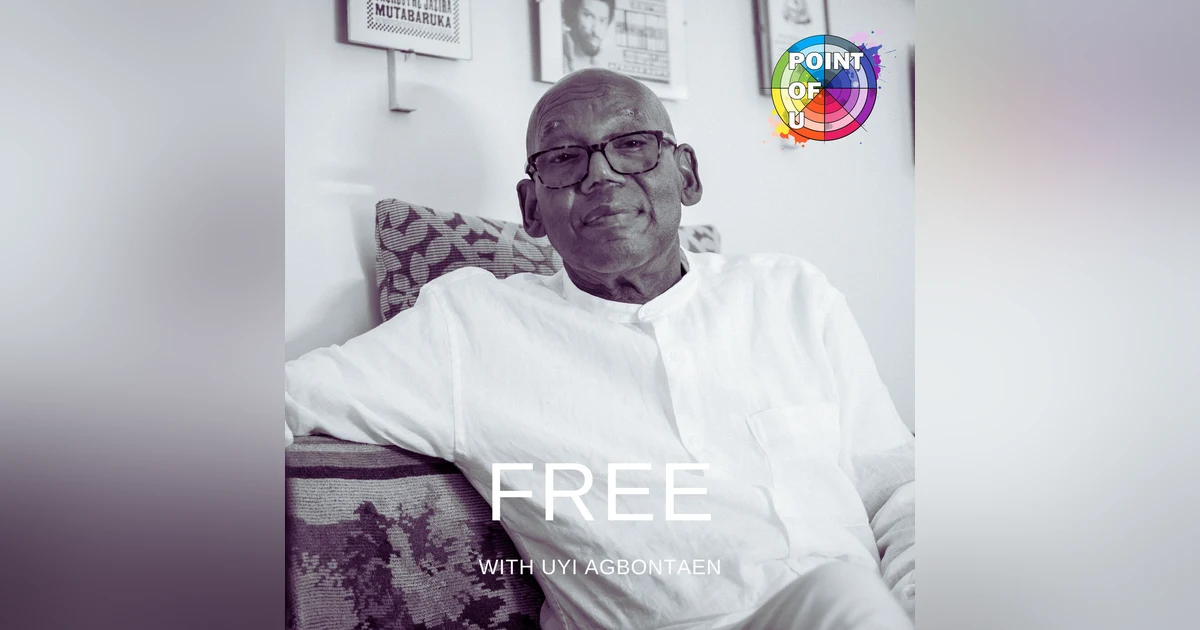
Today's episode is a celebration of Black History Month and I had an opportunity to speak to a pioneer in the Black British Community Wilf Walker OBE, one of the founders of the Notting Hill Carnival and revered figure in the music and entertainment industry.
Wilf helped shaped the Glastonbury festival with Michael Leavers to what is today and promoted an impressive roster of musicians and artists across the UK, such as Curtis Mayfield, Gil Scott Heron, Aswad, Musical Youth, Youssou N'Dour, Richie Havens, Freddy McGregor and the list goes on.
It was by no means an easy start for Wilf in life having had to overcome many adversities whether that be incarceration, the music industry or fighting on the frontline of Notting Hill against institutional racism (Wilf is mentioned extensively in Ishmael Blagrove Jr's book 'The Frontline'); it has made for a remarkable journey which he was kind enough to share.
Follow The Point of U socials at:
Instagram: https://www.instagram.com
TikTok: https://www.tiktok.com/@thepointofu?lang=en
Contact me at:
Website: https://www.thepointofu.com/
Email: uyi@thepointofu.com
Linkedin: https://www.linkedin.com/company/the-point-of-u-podcast/?viewAsMember=true
https://headliner.ai/free-wilf-walker-mp3
Uyi
Hey, guys. Welcome back to the point of view I'm your host, Uyi Agbontaen, and in today's episode, we are celebrating Black History Month. I got to sit down with Wilf Walker, a truly remarkable man with a remarkable story. A pioneer in the black British community who was it essential in developing an optinoe Carnival and discovering black artists in.
Wilf
The UK.
Uyi
Before we started? That you swim every day, and I've.
Wilf
Been doing it for many years. When I was a youngster, I fell off a derelict church in the damaged three vertebrae in my back, and I started seeing a physiotherapist. And in the end, he said to me, look, Wolf, I can keep taking your money, but what I suggest you do is learn to swim. And so I took his advice, and I've been swimming ever since. It's more than 40 years I've been swimming.
Uyi
Did it help you back?
Wilf
Well, what it does your sense of wellbeing, after a long swim is so profound that it makes you feel better. The pain is still there, but somehow you don't feel it because you feel so good.
Uyi
Yes.
Wilf
I mean, like, for example, most days I go to the pool. I don't want to go there, but once I get in the water and I start swimming and I do my swim, I come out singing in really good spirits. Always. It never fails. Yeah.
Uyi
Ah, so the hard parts are getting yes.
Wilf
Especially in the winter months, I bet.
Uyi
Luckily for you, the pool is literally across the road because recording in your flat. So for me, this is the first time recording in someone's house as opposed to being in the studio. But you're local and I'm local, so actually it wasn't difficult to do. Let's try and start in the beginning. You weren't born in the UK, so.
Wilf
I was born in Trinidad and Tobago. It's the most southern island in the Caribbean and the last stop before you get to the Latin American coast. So we're like about 12 miles from Venezuela.
Uyi
Yes. My partner's Venezuelan.
Wilf
Really?
Uyi
Yeah. My mum is from Venezuela. I've been to Venezuela twice.
Wilf
Okay.
Uyi
A lot of Venezuelans would go to Trinidad that's right.
Wilf
To study. That's right. Um, in my village, there was a family and they had, um, people come stay who were students of English. Most Caribbean people who go to school, they got very good grammar, they know they understand English.
Uyi
Queensland.
Wilf
Exactly. They might have some funny accent, but actually, you test them, they know all about it. They know their most proverbs and adjectives. They know their pronouns. They know it all better than the UK. Yeah, much better.
Uyi
Yeah. I remember because my family are from Nigeria, a British colony like Trinidad and Tobago, like a lot of Caribbean countries. So the national language is English.
Wilf
Yes. I mean, listen, the fact we've been through this pucker lies. We in the Caribbean are, uh, as British, as English as the welch, the Scots, the Irish. It's been like that for the last forever.
Uyi
So for me, my experience is different because I was born in the UK, and so even when my parents came over, as they were British subjects back in the day, but they came over as migrants, so they had that African colonial experience, but then they came to the UK and had the British experience. I was only exposed to the British experience. So even when I go back to Nigeria, I feel different there, because technically, I'm not from there. My family from there, but I'm not from there. We just had the, uh, anniversary of the windrush in the commemoration of the contribution of the Caribbean to the UK just a month ago, funny enough, when a lot of Caribbean came over, and I'm sure there's the same point. Africans came over, and probably when South Asians came over to the UK, their experience was very different to what they expected because they were told that this was the motherland and that they were all British. But when they came over to the UK, the experience was different.
Wilf
Listen, the experience was different because of the ignorance of the people. I mean, I've never really thought about it like this before, but in fact, we were very clear about who we were. But the ignorance of the local people and the lies that they were told about us is what made the experience difficult. They were told that we were coming here to take their jobs. They were told that we were going to be a drain on society. They weren't told we were coming to help, that we were qualified and skilled to make a difference in the economy in society. They weren't told that. They were told we were going to be a drag on society. So they sold their people in eyes. And that's where the difficulties were.
Uyi
Yeah, because now there's been a revisionism in the Caribbean and in Africa, but I think recently in the Caribbean, because obviously now you're having countries who are considering, should we still be part of the Commonwealth?
Wilf
Yes, exactly. I mean, look, the country that I see as being abused the most in terms of all this is the Jamaicans. In my business, at one point in my life, I promoted a lot of Jamaican artists, you name them. I voted everyone on. The roots and culture tip coming out of Jamaica I worked with at one point. And so I used to have to do at first it was work permits, but then it turned into visas, because what they did was they made Jamaicans absolutely persona than grass and they made Jamaicans worse than their traditional enemies, in a sense. Whereas the Jamaican, you had to get a visa to come here. I mean, the Jamaican culture at its core was very, very British. The amount of British people who benefited from being in Jamaica, all the best vestas in Jamaica where the coffee, the best coffee in England comes from Jamaica. And all these things that come from Jamaica that they had the most slaves out to Jamaica, and they exported the Jamaican economy more than any other. But yet they treat the Jamaicans in Jamaica. When you go to get your result from your visa application, you have to leave their premises before you can open your letter. That is how hostile they treat Jamaicans. If you make an application and there's one letter wrong, they send it back. They treat Jamaicans, I'll tell you, they don't treat Russians like that. They don't treat North Koreans like that, which is terrible, given the reality, the history of, uh, who the Jamaicans are.
Uyi
And that's why I said it's interesting now that these countries in the Caribbean, who are part of the Commonwealth, who had a pride of being British, are now actually reconsidering who they are and revising their history, and Britain is actually having to rethink, who are we?
Wilf
Right?
Uyi
And what do we represent, and what does the Empire represent? Because the story that was told has come out now by black academics back in to the actuals well, actually, that story is not correct.
Wilf
Well, but the thing is, they exploited everybody. That's why they've got the crown, because they exploited exploited the Irish. What they did in India, what they did in everywhere they've been, they've exploited people through shared greed. And so everybody wants out. And you can't blame them, because they've finally taken the hint that these people despise us. These people don't value us. Well, they value us, but not in the way that we think.
Uyi
Yes, not in the right way. They value our, uh, resources, essentially. And it's interesting that now the British institutions are waking up to head the royal visit to the Caribbean, which they thought was going to be a huge success. And it wasn't really a success.
Wilf
I mean, listen, there's so much hypocrisy involved. I mean, look, do you take the local community center, the Tabernacle, for example? There's a thing called the Caribbean Music Village, which is central to the tabernacle, and then they run the carnival. And in the last recent weeks, prince Charles has been in the Tabernacle to visit as a precursor to the next carnival. HM. He's pretending that he's, for the first time, he's discovering the Steel Pan. The Steel Pan is an incredibly well established musical instrument for decades. He's doing a photo shoot last week, pretending to discover this quaint instrument. I mean, I don't know how you're going to wake these people up, but they're so outside.
Uyi
I genuinely believe they're starting to wake up. I genuinely believe they're starting to think, I take my kids to the museums in the UK and I go to the British Museum. And before, I used to think, wow, it's amazing. It's an amazing museum. Look at all these amazing objects. And now I go to the museum and it is amazing. It's incredible. But there's a sense of sadness for someone. Well, what Britain's essentially saying is, look.
Wilf
At what we did. Look at all the stuff we stole.
Uyi
Yeah, essentially, right. Look at what we did. This is our empire. And my family are from Bini, in which you would know, right, bini is famous for there are famous for the kingdom, one of the oldest African kingdoms have ever existed, but very famous for their art.
Wilf
Yeah. The bronzes.
Uyi
The bronze.
Wilf
Bronzes.
Uyi
And they're distributed all over the world a lot in the UK and in Europe and in America. So you go to these museums and you're like, well, there you go. This is the stuff we took from your ancestors.
Wilf
It's really unforgivable, really. And in my personal life, the people who treated me badly now are probably all dead. But they did. They treated me as though I was born a criminal, and that was my reality. I mean, how can you treat a human being like that? It's unforgivable, man. But then what they do is they pretend that they've changed. That compounds it. They say, oh, we used to be institutionally racist. Used to be. You are, uh, and what you need to do is show me examples of that institutional racism, and then show me how you are compensating for it.
Uyi
Yeah. Ah. I think even though the UK institutions are now having to, uh, relook at their relationship with the former, uh, colonial countries in the Commonwealth and their own history, admitting that they did things wrong is a difficult area, because then, as you just said, what, uh, do you do about it?
Wilf
Yeah, well, they have to make amends. That's all right. There's no other way forward. Just saying, oh, we've changed. I mean, what's happening now with these young girls who they've strip searching, uh, I mean, it's coming up in drips and drafts. But what people don't realize is what you find out today, you've got to track back 60 years. You've got to track back 300 years in terms of the abuse that we have taken as a people, you can't say, oh, we've just discovered this. That is such an insult. It's an insult when they say, oh, there's this 115 year old girl who was strip searched, and, uh, she was on her period. When I think of my mother, who is 95 and a black woman, and what she went through as a girl, as a child in Trinidad Island, Tobago, it doesn't bear thinking about. When I think my mom's 95, the Queen's 95. But their lives do not compare at all.
Uyi
Completely different. How old were you when you came.
Wilf
To the I was 16.
Uyi
What was your first impressions?
Wilf
I came to Chapter's Bush. Near the chapters. Bush green and it seemed dark gray. Well, it was November cold, and my, um, parents were backward people. I can't describe it any other way. They were backward because for example, I had to go to school, but my dad went to the local primary it took me to the local primary school, and then the people said, well, you know, Mr. Walker, your son is 16. This is a primary school, so it shows you how much information my father and mother had. They didn't have any information at all. So then I ended up going to Chris for Ren, which was the local technical school. It's now called the Phoenix, and I was the only black boy in the upper school. I'd been in England three days, having come across the Caribbean for two weeks in a boat, and I was in this school. And I never really lived with my father before anyway, because my father had gone to America when I was seven years old, and when he came back when I was like 14 in the Caribbean in the 40s, everybody wanted to be as close to the monarch, to the queen as possible, to the mother, and, you know, everybody. So there were certain colleges that were set up that if you didn't get into those colleges, if you failed the eleven plus, which was the exam, you were destined for a, ah, lesser life. I failed it, my father failed it. But my father applied to join the army and come and fight in war, and he was refused. My father really hated being black because being black was a negative. That meant that you got less, you were treated less, you were looked down on. He hated it. So the quicker he'd get off the island, the better for him. But then all of a sudden, he had three kids living in a shack, and the situation was so dire, he took this opportunity to go to sea and try and find a better life. So he went to sea in the Merchant Navy, and then he got an opportunity to jump the ship in the States in a place called Baton Rouge in, um, New Orleans. And my granny had a sister who went to the States in the 20s as a domestic, and she lived in New York, and he went up there and she helped him to find work. So he was in America for seven years, but he was there illegally and he couldn't get straight. And then he gave himself up to the authorities and said, look, I've been in your country illegally for seven years. I want to go home and apply to come back in legally, which is what he tried to do. So when he left, I was seven. When he came back, I was 14. When he left, I was looking up at him. When he came back, I was looking down on him. And his situation hadn't really changed, because he still had no guarantee he was going to get back in. But here he was, seven years later. He'd seen the promised land, but he was back in the shit. You know, uh, so saturated that society, black society is cruel, you know? Oh boy. When you're going back, boy, you know, they're laughing at you, you know, look at him. And he's still in the chakradi family up there, the hill, that kind of thing. It's cruel, it's cruel. The vibe is cruel. But then he realized because he was a British subject, he could just come to England. So that in fact England saved him on so many levels. Saved his pride. It saved us all. England saved us all. Because if we stayed in the Caribbean, my God, we're so much part of the underclass. We weren't even going to get decent trades. I mean most people in England, you talk to black people, they have a piece of land somewhere. They could trace their family somewhere. I didn't have that. We lived in half a shack on rented land and we rented that half a shack and we really had nothing. And I don't know many black people like that in this country. Most black people I know have something back home. So when I tell people I come from deep down in the grung I don't think they understand what I'm saying.
Uyi
So you must have been really excited to leave that.
Wilf
Well yeah, of course. And I know what I had. I had a letter of introduction to the church from my local parish priest because the only place where I had anything similar to a social life was in the church. And I got involved m in all church activities. That's where I wore my nice clothes. That's where my social life evolved around the Anglican church, which is the Church of England. That was the only thing I had. And then I was here three days and I was at the school and it was a hostile environment. I didn't know it was, but it was a hostile environment because all the boys, the boys school, they all knew me in the sense that they had seen my type on the television. That we were this nuisance that was coming in to take their jobs and steal their women and blah, blah blah all these negatives about us. And so when I arrived they knew me. It wasn't very nice.
Uyi
It was a rude awakening.
Wilf
Yes. And also it was so cold. Oh, my God. So cold. The school didn't have playing fields. They used to bus the year to Salisbury playing fields every week. All the performers would go to this place to play football and um I didn't have any friends so they picked the team and um then I got picked last, of course. And then they put me in the goal. It was frost on the floor. I'd been in the country three or four days and I stood in the goal. Never touch the ball for an hour. Uh cruelty is relative, isn't it?
Uyi
Yeah, but it was cruel.
Wilf
It was uh so many things happened in that school that was so negative. All the boys were saying to me, mind the doors, please, mind the doors. Meaning that's where I'm going to end up. I'm going to end up on London Transport. I didn't make a single friend at that school.
Uyi
M but your parents didn't know anything.
Wilf
About no, of course they didn't know anything. They were timid. They were incapable of fighting their corner. Yes, boss. Yasminsta subservient but are hiding to nowhere. When you go for parents like that, you don't have parents who can stand up for their own rights. What chance do you go? And that manifests itself in other aspects of my life going forward. Confrontation with the police. For example, in my youth, uh, I got arrested and, uh, my parents said, as far as we are concerned, you're dead. The concept of the police being racist, I mean, those are the kind of parents I had. I forgive them, I loved them.
Uyi
They didn't know any better.
Wilf
Oh, cool.
Uyi
They didn't know any better.
Wilf
Yeah.
Uyi
So in their mind, it didn't even occur to them that actually could be the police who were criminals.
Wilf
Yeah, but it was the police were the criminals. But listen, man, I mean, I only knew white kids because the way my life was, I didn't know any black kids when I came to England. And, um, so I hung out with white kids, but they weren't my friends. I hung on their coat tails and they tolerated me, but they weren't my friends.
Uyi
You weren't equals?
Wilf
No.
Uyi
They weren't pairs?
Wilf
No. So an event, I got involved with a bunch of people and one of them was what you call a super dealer. He was a white Kenyan. This is a particularly interesting story because this story is the beginnings of me realizing that I'm a black man. Anyway, this guy was going to Kenya. His father worked for East African Airways. He was going there and he was bringing marijuana from there into the country. And from the proceeds of that marijuana, he was buying hashish. Hashish came from the Indians, the black ash. And he was sending that black hash to Canada and the States and getting LSD and masculine in return. So this guy was a super dealer. I thought he was my friend. I didn't understand all the aspects of his life. I was this spayed guy who would be hanging on their coattail and I'd go on to their flat and sit there and listen to music, rock music, mainly hippie music and smoke the odd joint. But I was smoking all these joints coming out of having had a nervous breakdown in the first place from an episode with the LSD. Anyway, they intercepted a parcel that this guy had sent to his college. And then they turned up at his house. And I was in the house. And I'd never been in a situation with the police before. I'd never been on the wrong side of the law in my life before. First time, so you would say my first confrontation with the police, where I'm on the wrong side, I've had confrontations with them before where I've been beaten up outside my house and I went to the police station to complain. And even though I knew who the kids who beat me up were, even though I knew where the boys lived and didn't know anything about it. So those are the kind of conversations I've had with the police up to that date. So the whole concept had never occurred to me before that day. And then the police are saying, if you don't tell us what you know about this situation, we're going to go and search your parents house. So he visualized the police sitting from our parents house with dogs and, uh, looking for drugs. They weren't going to find anything because there's nothing there. But the idea that they will do that well, in my mind, it would destroy my parents because I was still in the thing that would protecting my parents and not bringing shame and scandal to them. So I said, yeah, I gave him £5, which I did, to bring me back some grounds. And on that basis of that £5, they spun a conspiracy around me and connected me to this guy and all his international dealing. In the event, the guy and his girlfriend, they jumped bail and left the country because they knew what they were doing, right? The first time we went to court, there were 13 of us, ten. They all got fines and suspended sentences in the magistrate's court. But they held me over with the two who jumbbell and one other to go to the bigger court. It's more than 50 years ago, ma'am. But I genuinely did not understand the mentality that cast me a virgin in this thing as the villain. And in the event I wait two years for the case to come to court, I have another nervous breakdown waiting for the case to come to court. And the guy who is standing by bail writes to the court and says, can you call this case? They call the case and found not guilty of possession, but guilty of all the conspiracies. I'm given three years in prison. And, I mean, I go to prison and I can't believe I can't believe that I'm in prison. I'm thinking there's a mistake been made somewhere. And then this journalist writes a story called Potluck in the Courts, and she tells a story of famous journalist writing The Guardian. This whole story about my bad luck. And people rally around, um, to start a campaign to free Will Falker and all this business. And I get it. A radical lawyer. Now, he represents IRA people, and he's on a hustle as well, because it's a case that's in the media, so he wants the action, right? So then a year later, he writes to me and says we've had to abandon your appeal because what we think are technicalities in the way in which the case was put to you are in fact, stenographer's errors. So I've already done half my birth, so uh, I do the rest. But to this day I feel that uh, an injustice has been done to me because of the type of people I met in prison. I know that mine is a minor thing, um, compared to some of the other black brothers I've met in prison. The kind of injustice, the days that I received. And then I met a lot of white guys who are on the same kind of drug tip as me and they had done so much drug dealing and so much crime before they actually end up in prison. You think, uh, they were the pioneers of shifting marijuana. They were real pioneers of shifting it for real. And they were finally ended up doing sentences similar to mine or even less than mine.
Uyi
So would you say that you really kind of woke up when you got to prison?
Wilf
When I woke up, when I first got arrested, it took me to Brixton Prison, m. And when I came out to Brixton Prison, I went back to my parasols. My bags were packed by the door. I had to leave. And so I was in The Grove with nowhere to live and I've uh, got this thing hanging over me and I was sitting in what they called the Black People's Information Center. And that's when I finally decided to think fuck. One of people black people don't like. The state is out to get me. I never thought of it like that before. Like a smack in the face, wake up, nigga. I mean, really, you know, at least you woke up.
Uyi
So you come out of prison and from what I understand, you started being really entrepreneurial.
Wilf
It's so funny because while I was on bail waiting for this case to call over those two years I got a job in the West End for a company that was owned by David Frost. David Frost was a famous TV personality. He had a program called that Was the Week. That was and he's quite famous. He interviewed Nixon and people like that. Anyway, he ran this company and I got a job there. But there was a man working there who was a uh, rebuild and he unionized us. So I was a member of a union. So at the end of my prison sentence, I came back to The Grove and there was a meeting, a local meeting for the first time, the councilors. Because, you know, Kensington and Chelsea has always traditionally been a Tory Borough and they've abused us in the North End of the Borough. Traditionally, it's uh, all to do with the flyover and how the community was dispersed to facilitate the flyover. And they were coming to talk to us about this big fat plan. And the councils were coming to this meeting, and we held them there overnight. There were 400 of us in this hall, and we held them in there. Of course. I just come out of prison, and I was fired up, and I was out at the front with my tape recorder and all this business. So we technically kidnapped these counselors, let them know the next morning. So it was news. But we did get them to do things. Specifically. That's how we got the tabernacle as a community center. For example, we made them commit to getting the Electric Cinema, uh, as a listed building and lots of things. There were people in the room who needed housing there and then and made them commit to housing them. So basically, it was in the standard. It was in newspapers and the community TV. People saw a bit of the footage to the BBC, so it was on the news. And then after this meeting, I decided to go to my parents'house. They'd seen the BBC news or whatever news they had seen. I'd come there. I'd been out of prison three or four days. I'd had a change of clothes then it does. So as soon as they see me, they call nine, nine, nine. Ambulance comes and takes me to mental hospital. So out of prison three or four days, uh, into a mental asylum. So I have to try and work out how to come out of the mental hospital and rehabilitate coming out of prison at the same time. I came out of prison in May, and I spent till the winter in and out of the hospital. At weekends, I would come down to Lamborgh Rough, and I had a friend in fact, he was a friend who, when they did the benefit concerts of Freewolf Walker, he would spend the proceeds on heroism. Right? Like friend.
Uyi
Right.
Wilf
In retrospect, many years ago. And by he's a dear friend. He's one of my genuine friends. He's not a junkie anymore. He, uh, introduced me to my wife, for example. Anyway, he started squeezing oranges in the Portobello, and so I hooked up with him. In fact, I was more into it than him, even though it was his original idea. I think I could see the possibilities in it more than he could. He was just doing it, but I really wanted to do it. So I would come down from the hospital on the weekend, squeeze oranges, and then go back on Monday. Back to hospital. Did that for the whole summer. And then my first carnival, I did the oranges in the carnival. So I grew the orange juice business.
Uyi
When you said that, uh, you were involved in this little orange business, you were doing well.
Wilf
Yeah, I was doing well because the summer of 76 was a glorious summer. In those days, you could buy a box of oranges for £2.50 and you get 100 oranges and you get. 40 cups of oranges, sort of a box in the Port of Bella in the summer. Two stores. I could do 40 boxes. You do the math. It's like 40 boxes in a day. Yeah, they all hated me in the all the people of the top End, because all the antique dealers are taking so much money and creating so much vibes. I'll tell you another story about your just. I hit upon an idea to make it mobile. I got the striker as a prototype that could take 400 oranges and you could travel with it and park up somewhere. And I had half a dozen of them. But I only employed white kids because my experience was when my white kids were doing it, my employees, that's what they were. The police would observe them and they would say, um, oh, what a fantastic idea. 30 pence for a fresh cup of orange juice. Good luck, and I hope the sun shines for you. That's what they would get when they see me, the proprietor, they come over to me and they say, OK, you're nicked bike in the back of the van and off we go to the station. I don't know, I lost count. More than 20 convictions for trading auto license, for selling oranges, for selling fresh oranges. That's me, my employees. Not a conviction.
Uyi
That's the reality.
Wilf
That's the reality of, ah, this hostile environment, which we pretend it's home.
Uyi
So then from there, you start to.
Wilf
Get into the promotions, like through my friend Adam Kish. He was the original white bad boy who all the girls really like in the Arabella Churchill and Emily Young. You know the song The Pink Floyd sings? See, Emily play the girls in that song. That's her her family. Dad's. Lord Kenneth. So they were like, up there. So those are the kind of people you knew. And Arabella and Emily had lofty ideas about painting murals on the flyover. So I hooked up with them to help the fundraise. And that's how I started getting involved in promoting shows that the little benefit concerts. There's a guy called John Tubri, and he was the guy who was central to the benefit concerts we were doing. And he helped to manage Joe Strummer. He was involved with the Sex Pistol pit like that through my experience of working on those events. When we had a route in 76, we formed a black defense committee. My brief was fundraising. And so I started to organize events in my own right to raise funds for nottinghall rights. Yes. 76 rounds of rounds. Uh, my first concert I organized and managed to get the Last Poets, the radical poets in the States, to perform.
Uyi
How did that come about?
Wilf
Well, I knew a black American guitar player who used to play with Icatina Turner that called Jimmy Thomas. He died recently and he was friends with the Poets. They were in Paris. I mean, people don't understand how hostile this country is. The poets. Nobody wanted the music business didn't give to monkeys about the poets. Um, they were in Paris. July was in London, sniffing around, seeing what he could do. But nobody's interested. Little Me up is interested because I knew who they were. So I put them on top of my bill. And so in doing that, then I organized a press conference. And every single music paper, including The Guardian, things like that, turned up at my house for this press conference. I found it amazing, you know, and it made me think, oh, this is something I could maybe do for real. And then the show, we did the show, and people like The Guardians gave me really bad reviews, but people really knew who they were. Give me good reviews. Two reviews of the same event, and one is so negative by The Guardian and the other one by someone who knows about jazz and rap. It's very glued, you know what I mean? And we know what it's all about. The guy at, uh, The Guardian didn't know who I was, and so because I wasn't one of his mates, he's going to slam me.
Uyi
We kind of talked about this before we even started recording. It is strange, isn't it? Like access that you have to people or their views of you, whether you're known or not known.
Wilf
This man, Heskers Williams is dead. Now, he was another radical poet, but white. The reason I know him is because he was a patient at the same mental hospital that I was in. And I found out about him. Someone told me about him and gave me his address. And so I just went wrong and rang his doorbell. I said hello. Hescott. I'm, um wilf. I hear you were in the same hospital as me. And he said, oh, come in, come in. You live in that catherine. And He Powelled me up straight, gave me a camera, became, I mean, one of my best friends. I got a picture of him and me on the wall there. And his wife was involved in the local politics. And three, she wrote a letter, and I got offices ordered to fly over. She made it happen. So I got offices and started, uh, organizing concerts at the Aquaman Hall every week. I never done anything like that before. I had to find three bands every week. So my strategy was two punk bands and a reggae band. This is like the same time as Rock Against Racism.
Uyi
I think you have to explain the Rock Against Racism, because obviously, some people.
Wilf
This is like this is late seventy s seventy six, seventy seven, seventy eight. This is after the races. 767-7787 nine. This is coming out of Eric Captain being very racist. Um, some white folk got together to start doing Against Racism. They were doing exactly what I was doing.
Uyi
What Eric Captain done, he'd made a.
Wilf
Very racist statement and support Niggas and studying Niggers home and all really wow.
Eric
Drinking where I did really offensive things. I was a nasty person. Which I say in the movie that you're often reminded about in Wicked.
Wilf
To.
Eric
Describe the people you wanted to get out of the country. Yes well I mean I think it was based on the Arabic invasion where um I think as much as anything it was about what do they call it, the foreigners, just foreign people. What were they taking over the country? So simple minded, working class villager like me. Uh, which is what Brexit is all about in a way. Interviewing people in pubs and encouraging them to say the things they say. And there was a sort of air of this around the early seventy s and I'm not excusing myself, it was an awful thing to do. Look at it now when.
Wilf
Um so I started doing these things and had a modicum of success. Um but then the right wing, there were two venues, they burnt that building. They tried to burn down the aquaman hole as well. So that's when I quit. You're in a siege situation. I've got to find three bands every week, I've got to print a post every week, I've got a fly post every week, I've got to distribute leaflets every week, I got to run my box office every week, I've got to pay wages every week. I mean it's relentless, it's like you're running a restaurant but it's putting on gigs and I'm one man band. Plus I'm affording myself an apprenticeship in my own company.
Uyi
You were learning, as you know, the whole thing but in a sense you are being entrepreneurial.
Wilf
Yeah. Connection. Running my own ad department, placing my own ads in the papers. But the reality is that the place from which I was doing it they should have been affording me the office that I was in without me having to pay rent. They should have been affording me a salary but no, I was paying to be there when I should have been paid to be there because of the.
Uyi
Amount of work that you were bringing.
Wilf
In essentially because I was promoting the aftermor other people booking it it was becoming a thriving situation.
Uyi
So talk a bit about the punk band and the reggae band because when people think of punk and reggae today they think that they're world apart. Whereas before they weren't like Scar, punk and reggae were closely connected.
Wilf
Well there was a mutual peace treaty.
Uyi
Right?
Wilf
I mean the punks didn't say anything derogatory about the rigged guys and uh the rigged guys tolerated the punks. They were never friends, they were never bosom buddies. It was like they taught and also it became fashionable on a level because I started going for Windsorfree Park, I got involved with Glastonbury Festive, things like that. I got Michael Levis stories, I used to work with Michael Evans and Michael Levers dismayed, big time. Um, I had to go and buy his book to see what we dismayed. I said, Somebody's so wicked then because they can diss you because you're nobody and you've got no comeback. So Arabella introduced me to Michael Eaveas at a point where he'd been doing Glastonbury for a while and losing money and in his first wife. I said, this is a laugh here. If it doesn't work, we're going to pack it in.
Uyi
Because when Grassenbury started out, they weren't making money.
Wilf
No. 81 1st year, he's going to make money. I booked Taj. Um Mahal. Uh, who headline on Sunday? The thing about this was that Michael made an alliance with a campaign for nuclear disarmament. Nobody talks about this. The campaign for nuclear disarmament I had in those days, a billion is of 3500 people. And that's where his audience comes in. Yeah, that's where the first time he's ever financially successful, that's the audience. It's the C and D. Audience Then the next year, now 82, I bring Rich Haven and then I know some people who want to film Gladstonebury and Michael. Chris Plummeley, the plumbing brothers, they prepared to give Michael £50,000 for the right to film Gladstonebury. So all that's on the table. I, uh, also said to Michael, I know you too, because I was also the night manager of a hotel in Nothing Hill called the Portabella Hotel. A lot of musicians stay there. And you too stayed there. Yeah. So I said to him, I know the band because they stay in my hotel. I knew Paul McGuinness, so I could, uh, introduce you to him and you can make a deal. When his book, he says, oh, I knew this black guy who was the dorman at the Portobello Hotel. That's how he described to me the black guy who was the dormant of the proteveloper who assured him that he could get me too. And he says, wishful thinking. Meaning that this black guy is the one who sucked it up, which is a complete lie. Michael knew who I was and how I interacted with the festival. And then also I was actually developing not in carnival. You can't as an individual say you're developing not being a carnival because it's not your development. It's a people's thing in a real sense. So you've got Michael Levers on one hand, who is developing Glassbury Festival as his, uh, thing, when in fact it is a people's thing. And you've got this thing that you can make a difference is but the carnival is the people's thing.
Uyi
Yeah.
Wilf
You see what I mean? So it's a rock and a hard place. Um, yeah, I started to be involved on that level with things. And occasionally you would get a conscious ban like Misty and Roots. They were very central to the Rats in Seoul, toll, the Blair Peach and all that. They were very political righteous brothers. Uh, they were one of the main riggy bands that I worked with, and I put them on the white band called The Members. The members had a hit to the song called Offshore Banking Business. They were quite radical. Come, you know, listen, in my experience is as a black person in the music business, you were never accepted. Maybe people are more accepted now, but in those days, you were forever the outsider.
Uyi
Never accepted by the people in the industry.
Wilf
People in the industry, yeah. All the bands that I used to put on, um, who made it at the point where they made it, I cannot get to work with them anymore. I got a long list of ads like that.
Uyi
Uh, so you were like a, uh, stepping stone for that?
Wilf
Absolutely. As worked with Aswood from the very beginning of Aswood. I put ASWand in the road out of the hall. We did 4000 people sort it out and then they charted. And I never saw them again until it was over.
Uyi
So even the black bands even the.
Wilf
Black bands listen, successful black bands are like successful white bands in the sense that I'll give you an example of one of the cruelest cuts for me was a guy called Africa Bombarda. Quite a famous American, um, sauce on the force and all this. He was really happening back in the day. I flew to New York, Africa Bombarda, we hung out together, gave me all these Farah Can tapes. Um, and we were brothers, right? I was going to come back. I was going to do it based on applicable barter saying you could do it. I come back to London, I put together twelve shows. Then a guy called Byron ohm, one of my competitors I mean, another one of my competitors was Kim Westwick.
Uyi
Right?
Wilf
I mean, I bring him up because he was part of that whole time with Africa Bombarda. Basically, they told Africa Bombarda he couldn't work for me. The shows were on sale, and they told him if he did it, he wouldn't be able to work in the States anymore. This company was called Famous. This is a good point of reference.
Uyi
Press cuttings and stuff, roughly like 90s.
Wilf
Um, 28 years ago. How old was that? 28 years ago?
Uyi
Yes, like 90s. There's a reference westwood was big, like Westwood fees.
Wilf
So in the end, they said to Bombarda, you'd better tell that negro to pull up shirts you ain't doing if you do it. Because bombarda's market is America. Europe is a notion. They can move out because there's something to cut style or the contemporaries or whatever. So they blew me out. And it's so funny because years later there was a chamberrack store that I should have got, but the same company, the Bombarder, had the act, and they sold it to a guy called John Sherry who ran Bans like the last tickets. He was a big agent, but he got the act, but he didn't know what to do with it. He advertised for an agent in the garden. I applied for the job to go and book the bombardor for them for 10% of their 10%, because, uh, I got to the point where I was desperate for work. So I booked all the dates and I never got paid.
Uyi
You didn't get paid?
Wilf
I never got paid. I still haven't been paid. Freddie McGregor. I brought Freddie McGregor here in 1986. The whole studio, one band responsible for them all for their food, for their health, their salaries, for their accommodation, everything. Uh, they're here for a month. We did 30 shows, even a bit more than a month. At the end of that period, they put out. I don't want to be lonely. It charts. And I start having problems feeling the Freddie all of a sudden.
Uyi
Yeah. So you, I guess, encountered a lot of bands who were, uh I wouldn't say starting out, but they were like at that mid level of getting to the next level.
Wilf
They were bands where I was prepared to make phone calls, but the point where calls started to come in, they were abandoning me. Another one is Ronnie Jordan. God bless him, he's dead. I did 50 shows with Ronnie Jordan, and then he said to his manager, I want to go to a bigger agent. I said to him, that's right, Ronnie, you do the traditional thing. Just fuck off.
Uyi
So you were making networks with these guys, put on shows for people who were just about to get to that, ah, stage.
Wilf
At the point they get to that stage, it was finished. Wow, so many times.
Uyi
Would you say it's still like that?
Wilf
Well, I don't know. I'm not in the game anymore. But I should imagine it's still like that. You know, the black Americans changed that. A lot of the black Americans who became Black Muslims and got a level of consciousness, they changed that to a level because they were committed to keeping it black, uh, in England. I mean, musical use, american musical use. Very first London show, and then they charted. I never wrote to them again. You see, I say YUSU and door. I mean, I did all YUSU and Door's early shows. We're doing good business, selling on 2000 capacities. And yet all of a sudden, he did the thing with Donna Sherry. As soon as he's done and he gets in the charts, it's a problem. I can't book the act anymore because some agents say, well, if you want to do the act, you got to guarantee the sell out. And they want to play the audience. I can't afford to guarantee a sell out of the audience for you to endure, because I know he can't do the business, but they want you to guarantee he's going to get paid. Listen, the fact that I'm still alive is the thing that I celebrate every day, because a lot of my contemporaries, uh, who shut all over me. They made the money. They made a lot more money than I ever made. A lot of them are fat. I mean, my health is great, but it's not as bad as theirs. But the business has become a lot more corporate now, and so it's B Companies, AG and Live, uh, nation.
Uyi
So you've had success actually doing the music promotions, finding your way to make a career out of putting on these shows, making connections with these acts, amazing acts who have topped the charts and headlines. But at the same time, it's been a battle.
Wilf
It's a constant battle.
Uyi
It's been a battle.
Wilf
There's very few musicians at a higher level with any real integrity and any kind of loyalty clause in any contract you might make with them. I can call them on one hand. Misty Roots. Liz and Quasi Johnson. Burning Spear. Um, Joseph Hill culture. Very few who committed to working with you based on having an ongoing experience of working with you.
Uyi
A good experience. Yeah. How did it feel then, when you've basically helped progress their career, and then they leave you for someone bigger? Uh, especially considering a lot of these artists and bands were black bands.
Wilf
Well, you think it's the band's choice.
Uyi
Or is the management's choice?
Wilf
It's a combination of the two. Because I always say, all I want is for these acts to sit in management. I want to see offers from black promoters, but they don't. I discover that Jimmy Clinton doesn't care who the promoter is not he gets his money. A lot of them don't care. They don't care because it's basically don't give a shit what he promoted, as long as he gets his money. So all these guys, they got this lofty idea about black consciousness, but they just want their money. They don't care. They don't think. I want to see offers by brothers. Brothers what's there?
Uyi
Ah, I can definitely understand that happening. I'd like to think today that there is a consciousness. I don't really know whether it is there in the music industry. I know for sure it's there in the film industry, because I know a lot of directors and producers who are black and now saying that we want to make sure that we have the talent represented. But I don't know what it's like in the music industry.
Wilf
Obviously, it's cheaper for the better. Uh, it's got to, because it can go on like that. When I go to the company back in those days, they always say, oh, yeah, it's the missing link on the missing link, because they never have no blacks before. Yeah, but it's not like that anymore. I mean, you've got blacks running red companies, international companies. Darkness is running, born brothers running. So there's black people in positions of power who would possibly give a black guy a break? Who knows? I don't have the proof of it.
Uyi
Yeah. And I hear what you're saying. When did you stop the music promotions and work in industry? Because you said even up until two years ago, you were still working.
Wilf
Well, I stopped taking big financial risk after a while. But I'm the one who got an OBE for developing and promoting life in the last, uh, 40 years.
Uyi
How uh, did it feel to get an OBE?
Wilf
Well, I felt kindly someone is recognizing my m commitment to the area of work.
Uyi
But when I met you today, you showed me a book that you all featured in.
Wilf
What was the book? It's a book about lap resistance in double growth. About the life, uh, of the front line.
Uyi
That's the title, right? The front line.
Wilf
And all the individuals who are players and casualties of the Front line. Since we're in rush.
Uyi
Yeah.
Wilf
Yeah, I'm in there. But I was a very busy body, so I would be involved and lots of people who are in the book mentioned me as part of their story. So uh, I'm crisscrossing like that. I'm the only person from my community who has worked all the major venues in London the Albert Hall, the Festival Hall, the lycl Dominion, all these venues. I could chosen them to think about knocking a cargo, for example. I started doing live stages. I used the music to counteract strategy that the police had for Carnival to counteract that strategy. And ah, that's how it started. And I ran the stage for twelve years. And then the community, the Carnival community, the guise of Claire Holder, gave my stage away to the BBC. But in fact they gave my stage to Tim Westwood, uh, who, as it turned out, used my stage to abuse Young Black Girl. So he made the poetry in that. And Tim Westwood knows me. The first morning he stood on my stage, I was walking by and he stood on my stage round for the movie like this m I had to suck it up.
Uyi
Yeah. And look how things have turned out. Yes.
Wilf
Uh, and look at what he is.
Uyi
Yes, exactly. The westward section.
Wilf
And this man. I would afford people who were making music in their bedroom an opportunity to play on the same stage as Kokney Pine or Sugar Minor or Riprid Panic or Lisin Root or Azwar or Bernie Fails. They will never be afforded that opportunity on a stage run by Tim Westwood or BBC. Because in order to get on their stage, you have to have a deal.
Uyi
You have to be established.
Wilf
So by giving my stage away, they sold out their community. I mean, this is what my people did to me. Um, and if they say, why don't you come back, come back tomorrow. And then somewhere they don't, they still don't get it. And that's what they did.
Uyi
I'm definitely thinking that they're rethinking what happened with the whole Westward situation because that's still playing out now. Well listen, we've been recording for an hour and a half and you've given a lot of information and told your story extensively and given insights into the industry and music. It's been really fascinating. So thank you for your time and thank you for inviting me to your house. Actually, uh, a bit different setup to record. I appreciate you sitting down and man, thank you very much. Thank you. Okay, guys, that was Wilf Walker. As always, you can find out more about my guests in the show notes. Also, we're fast approaching the first anniversary of The Point of View which would be on October 27. So look out for the new trailer that's coming out and for the anniversary special which will be arriving in a couple of weeks, a compilation of the best bits over the last twelve months. Thank you for the support, guys. I really appreciate it. I will see, see you in two weeks time.