
Classically British: Mark Elie
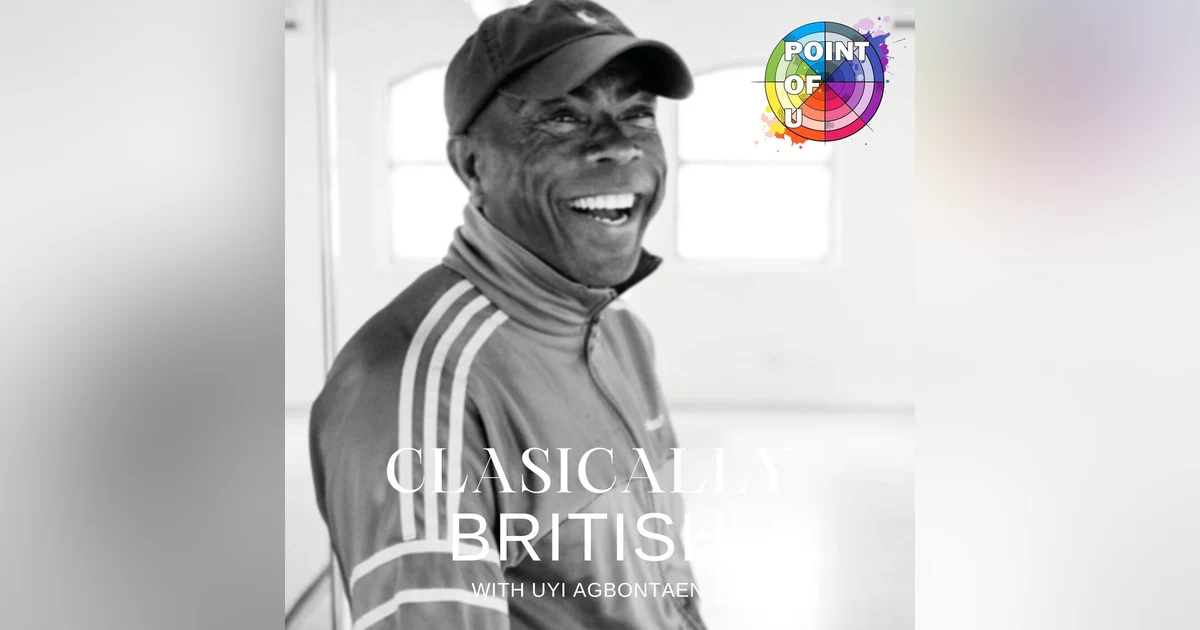

There are few languages that truly universal and one them is the language of dance, travelling, connecting and communicating all across the world.
In this episode I spoke to the Artistic Director and Founder of The Portobello Dance School Mark Elie, where classical and contemporary dance is taught up and coming British talent.
We discussed his journey of over 4 decades in Classical Ballet, which saw him working and studying in the UK, US and Portugal.
Today Mark champions Black British Ballet with events such as 'Classically British', in addition to providing a platform for the next generation to fulfil their ambitions at his school situated in the famous Notting Hill.
https://admin.headliner.ai/classically-british-mp3
Uyi
Hey, guys. Welcome to another episode of The Point of View. I am your host, Uyi Agbontaen. In today's episode, I get the chance to speak to Mark, um, Elie, the founder of the Portobello Dance School, which is situated in the famous Notting Hill, where he teaches young talent, classical and contemporary dance. Mark has a career spanning over 40 years.
Mark
OK, onto the show. Have you done a podcast before? I've never done a podcast before. I've done radio interviews, but not podcasts. This is very new to me, the podcast the world.
Uyi
Yeah, I guess podcast is the new radio, really.
Mark
Okay.
Uyi
I guess the real benefit of the podcast is that you have longer to talk. So how are you?
Mark
I'm very well indeed. And what do I call you on this podcast?
Uyi
That is a good question. So people call me Uyi. Yui, which I'm happy to be called. Obviously, my name is different when you see it. Right. So my name is pronounced Uyi. So when I actually introduced the show, I always say my name is Uyi because I feel bad saying Yui in case my dad listens to it. And my mom is like, what the hell are you calling yourself Ye for? But when I was growing up, uh, in the UK, it was hard for people to say we and it became Yui. So now when people say we're, it's like, oh, it's mom and dad speaking to me and it's Mark.
Mark
It's Mark. Elie.
Uyi
Elie.
Mark
Which on average, 90% of people that try to either read my name, read it wrong, or pronounce it wrong.
Uyi
Right, I get it. Many years, people trying to say my.
Mark
Name, same as me with Eli Ollie. Sometimes they just don't get it. And when they do get it, it's a really lovely, pleasant surprise.
Uyi
Yes. So, Mr. Mark, you have been in the dance business for quite a while.
Mark
I have. I have been in the dance business basically since I was ten years old.
Uyi
How did it start?
Mark
Um, well, it started because where I was brought up, which is a children's home in Paddington down there near Little Venice. As a young child growing up in the children's home, um, I was very inspired by the pop program Top of the Pops back in the day. And there used to be a dance group called Pans People and used to stand in front of that television religiously. I think it started around 07:00 in the evening, waiting for the Pans People to come on and basically imitating them to the best of my abilities. And I think that's where it sort of started. It was Top of the Pops and then it grew from there, really.
Uyi
If you don't know what Top of the Pops is, famous shows, BBC, where all the singers would come, um, and show the songs that are heading up the charts to the number one spot. It's a bit different now. We're in a spotify and TikTok generation.
Mark
Absolutely. And then, of course, you've got the Pans people that used to come in in the middle of that show and dance to the pop hit of the week. And that's where it sort of started for me, really, with the Pounds people.
Uyi
You were inspired by Pounds people on Top of the Pops. What led you into dancing?
Mark
Well, having performed on Top of the Pops every Thursday night, do you know Queens Way in Paddington? There was a lovely old ABC cinema there. And every Saturday morning I used to go to the Saturday Morning pitches, and then halfway through, they'd have a dancing competition and I'd, uh, enter that and win every week. That sort of boosted my ego, I guess, people enjoying me as a performer. And then my house mother that we called Aunty my Auntie Helen, saw that I had the talent to want to dance and thought, well, you know what? With dancing comes discipline, and ballet would be an interesting discipline for maybe Mark to pursue. At the time, I had a wonderful social worker called Julia Graham, who became a lifelong friend and supporter and mentor. She thought, yes, that sounds like a good idea. I couldn't keep still for Toffees, so they thought, well, maybe if I were to pursue classical ballet, that would keep me grounded and disciplined. Because most great dancers in the commercial world have some form of classical training. Usually the best have had some experience in classical training. So I thought, okay. My social worker took me to the opera house to see Rudolf Nurev, the Russian ballet doctor who defected from Russia. He was just amazing. And I guess after seeing him perform and then meeting him after at the stage door, ballet was the direction that I sort of went. I auditioned when I was ten for the Ballet Rombear School, which originally was in Nottinghill Gate at the Mercury Theater. Uh, and then the rest really is history. I started there and continued first in one class a week, and then when I left my secondary school, which was the, uh, hard school of knocks for me, as you can imagine, being a mixed race guy in an all boys comprehensive school, it wasn't an easy challenge for me.
Uyi
If we go back a little bit, when you used to go to the picture house in Queensland, ABC, have you had any training or was this all self-taught?
Mark
All self-taught. Back in the day? Sundays was a really big day as well, because they do the top 20. So if you transistor radio, you'd be with your mates and you listen to the music and you dance. There were little discos that you went to. I just loved performing and getting the accolade of people enjoying me dancing and people did them.
Uyi
So, apart from fans of people then, I'm curious, who else inspired you dance wise?
Mark
In those days? There was the second generation and the first generation. And there used to be a guy called Floyd who eventually went to dance with Hot Gossip. He used to be featured a lot on television commercially. And he was at, uh, Ballyhon Be, where I studied later on. So I didn't have many role models to look up to that were British and black, but he was one of them. And eventually I got to meet him and he became a legend in the dance world commercially. In the UK. Hot gossip by Lynn Phillips. Many movies, commercials, videos, an inspiration for.
Uyi
Me, I guess, the period we're talking about, which was kind of pivotal view. This is the yeah, I'm thinking of things like fame. I'm thinking about the, uh, music video about to take off, michael Jackson's with his MTV music videos, which were huge dance numbers. There was a lot going on in the dance world then. And you said that a lot of modern dancers are classically trained. So what's the difference between modern dancing, classical training, and why do a lot of modern dancers tend to go to classical training before they take on their career?
Mark
I think that the discipline that one gets from the classical training can really help. And the perfection of the aesthetic, uh, of category dance helps you to be a better dancer, uh, all around, really. I'm a great believer in natural street dancers. I admire that technique, that style and that discipline. But then when you sort of add the discipline of classical bags alongside that commercial stuff and so forth, you can just see that finishing touch, that Junice, which you get with the classical training. Carlos Acosta, for example, who's a world renowned ballet dancer, but he's not just a ballet dancer. He can turn his feet to all different styles of dance. And I've seen him do so, and, uh, he does it exceptionally well, especially Latin. Exactly. And I've seen him do locking and popping and breaking and all the rest of it. He's touched on every area of dance aesthetic, but he always goes back to his roots, which is a classical technique and the classical training.
Uyi
Um, yeah, I saw him perform in Saddle as well. Tokororo, I believe, was his show, uh, Cuban dance legend. Yeah. You enrolled in the RamBar Dance school. Did you have to audition to audition?
Mark
I did. I auditioned when I was ten. Yes. It was quite young. And the first audition, really, because I didn't really have the experience of auditioning for anything. I went from really performing at places, like I said earlier, uh, serious audition. I guess it was wrong there, but I remember it so clearly. I went to meet the director, who was Angela Ellis, who was the, uh, daughter of Mary Rombe, who was then the artistic, uh, director of the Rombe School, based at the Mercury Theatre, nottinghill Gate. And I went and I just remember being in her living room, basically, the dance school and her living quarters were right next to each other, and she said to me, can you show me a really big jump mark? So I got down to the other end of the sitting room, and I ran a bionic man, and then I just did a big leap, which is commonly known in the Bali world as a Jette. So my Jetty must have impressed Ms. Angela Ellis, and the rest was history. I got a scholarship, and I was on my way to do classes at the Ballet Romber in Nottinghill Gates, Mercury Theater.
Uyi
That's incredible. I was doing a little bit of research, and it's pretty much one of the oldest dance companies in the UK. Right up there with, uh, the Royal Ballet School. I mean, we're talking back in the 1920s.
Mark
Yes. Celebrated 150th anniversary not so long ago. Yes.
Uyi
A lot of history.
Mark
Absolutely. And a lot of dancers.
Uyi
A lot of dancers. So how long were you at Romberg School?
Mark
I got there when I was ten. I got a scholarship to continue my education in dance and contemporary dance at the Rombre at 15 years old, and they do a three, uh, year graduation course, and I completed that in two years. Oh, really? Yeah. By the time I was 17, I got my first contract for a ballet company.
Uyi
That's early, I'm guessing.
Mark
Uh, it is quite early. And, uh, I was very fortunate, because at the time I graduated in 1976, and at that, uh, point, there must have only been one dancer of color that was in any of our ballet companies. I'm talking about the Royal Ballet, the Then Festival Ballet. Now. It's called the English National Ballet. There were no members of the company that were black or mixed race. Both female or male. In Festival or the Royal. But in Scotland. There was a. Uh. Scottish ballet. And there was a gentleman there called Vincent hantum who came via South Africa. Got a scholarship to the Royal Ballet. Did not get into the Royal Ballet Company because of his color. And basically was told. But he was embraced and given a contract for the Scottish Ballet. And we'd heard about him. Most dancers of color in London at the time, and at my school, there were a good few black and mixed race dancers, both female and male, had heard about Vincent, and if you were lucky, you would have seen him dance in, perhaps, Pineapple. I didn't get that opportunity because I was a relatively good boy, and I didn't go sneaking down to Pineapple Studios. But on the occasion that I did was when I actually auditioned for the Ballet School Banking, which was a ballet company based in Lisbon, in Portugal. When I got to graduate, as I said before, there were no working black male or female dancers apart from Vincent Hanson in the UK. And I thought, well, what am I going to do? So I bumped off ballet school, and I took myself down to the Erdan Academy that was based down in Covent Garden, then around the corner from Pineapple and auditioned for this company. Thankfully, the director, George Salaveza, saw, uh, my talent and offered me a contract. So I was very fortunate to graduate and get a contract in the same year.
Uyi
So you even bother to try and join a dance company in the UK? No point.
Mark
The reality was no reflecting on it now with you how lucky I was to audition for the Ballygo Banking because originally I was offered a chance to go to New York to pursue my classical career with Dance Theatre of Harlem, which was the first black belly company directed and founded by Arthur Mitchell. But at the time, uh, when I was at school, I had a teacher. I won't mention his name. I think he knows who he is. And he put a bit of a spanner in the spoke for me and just didn't give me very good PR. So I lost out on the opportunity to go then. That's why I thought, well, if I can't go to a dance field of Holland, I'd better do something quick. I stayed in Lisbon, in Portugal for a year. An amazing company. Very international company with both black females and males and Caucasian dancers from all over the world. And, of course, Portugal. Beautiful company and a wonderful director that saw my talent and gave me the opportunity to pursue what I loved, which was dance.
Uyi
As a really young man, you're at the Rambest School, you want to be an amazing dancer, you want to be up there with the best. Then obviously, comes a point being a person of color, that you realize there are a lot of closed doors. How did that affect your mindset? Didn't that put questions in your mind?
Mark
It did. I was so consumed with dance, and I was not only training in classical and contemporary, but I was a very good club dancer. I was a really good street dancer, club dancer, and I was, uh, quite well known. So I think that with certain people around me, I might have had the opportunity to have maybe gone down that commercial route and did that kind of work for a while. But it didn't, uh, dawn on me. Apart from the fact that one of the dancers at Rombear, a black dancer called Patrick Lewis, I saw him as the black Antony Dao. He was a phenomenally trained classical dancer, a perfectionist. We have to have a certain aesthetic in classical dance. It usually consists of very good feet, as in those feet point in the direction they're supposed to. .1 has to be supple to take on the language of Casaco dance in a way that is demanded as you pursue your career and you see other dancers around you. It's lots of people that are after positions in these companies, and the standard is extremely high. And Patrick was for me, Patrick was the best. And when I now, which I can do. Compare Patrick and Vincent Hanum. They were both extremely top of their game. Patrick went on to pursue an incredible classical career, which he fought for two for now, he fought for that career. Uh, and Vincent was fortunate enough to get into the Scottish Ballet and pursue a classical career. But there are not many black, um, British females or males that can say back in the day that they pursued a career as a classical dancer in this country. I think I can name them all. Noel Wallace was the first black guy to dance with, then Festival Ballet and now English National Ballet. Brenda Redwoods was the first girl to get into the English National Ballet. Patrick went off to Europe and, uh, then Denzel. They were very embraced of the black male ballet dancer in the UK. And I guess that was the pioneering work of people like Noel Wallace and Brenda Edwards and also Carol Strayker, who I met in New York, who was a black British, classically trained dancer, who had an incredible technique and incredible aesthetic and understanding of the classical ballet technique. We actually met at Dancers of Harlem. When I finished my contract with Valuable Banking in Lisbon, in Portugal, I was very fortunate to have been offered again the chance to go over to New York and continue my studies with Dance Theatre of Harlem. So there were a few names that were able to pursue their passion for classical dance.
Uyi
Predominantly male.
Mark
Predominantly male.
Uyi
That's an interesting point to bring up. Even today, black female classically trained dancers find it hard. Why is that? I mean, I know why it is, but from the inside, why is that? Why haven't things changed, in your opinion?
Mark
Well, it's always been about the directors. It's always been about control. There's a film, really, that says it all, the Black Swan. I don't know if you ever had a chance to see that film. That sort of touches on a lot of issues of being in the world of classical ballet. But as far as I'm concerned, it was out and out racism, really. Just not wanting to embrace the black aesthetic and having as many excuses as possible not to have them embraced into our classical bubble as such. I remember Anthony Dow, who was the director of the Royal Ballet then, coming out with dreadful statements on why he wouldn't entertain black females in his company. Peter Schaffer, on the other hand, who was directing the Festival Ballet, English National Ballet, known as now, he was much more embracing and not really understanding this whole blockage of bringing black ballet dances into the British ballet world. He was the one that encouraged and gave contracts to Noel Wallace and Brenda Edwards. They just didn't really see us as being in their environment as much as they knew that we could do it. One, because we were doing it. And two, because we did have, of course, Dance Theatre of Harlem that were phenomenal and that were really breaking that whole illusion that it was just totally for the white dance world to do classical ballet.
Uyi
Yeah. Ballet is rooted in the very privileged in society. When ballet was formed in France, it wasn't for the common man. It wasn't for the common, uh, man. It was for the bourgeoisie.
Mark
Absolutely.
Uyi
It was for the bourgeoisie. It was also what the elite of the European society for aesthetics, what beauty was. So it definitely wasn't for the common person, and it definitely, uh, wasn't for people who were minorities, um, full of color.
Mark
Absolutely.
Uyi
So how did you get to the Harlem Dance Theater?
Mark
Because I previously, uh, auditioned and Mr. Mitchell saw me. And then after having done a year, uh, in Portugal at the Belague of Benkhen, and the director of George Salafiza basically just said to me, straight up, mark, I'm not offering you another contract here. You need to go to America. And I got another invitation from Mr. Mitchell to come out, but not to go into the company, but to go into the school. And I was fine with that, because I just, uh, thought the experience of going to Harlem and being around these incredible dances is going to be second to none, and that's going to be, uh, something that I'm sure is going to change my life. So I went off to New York, and I was very fortunate. I got a scholarship for three years. Not only that, I actually lived in the Mitchell's household with the legendary Mrs. Mitchell on 152nd street between Broadway and Amsterdam. So I was not only training at Dancer Harlem, I was living in Mr. Mitchell's Brownstone home. So it was quite an all round experience. And I was part of, I guess, a group of dancers that were invited simply because they had what it took for Mr. Mitchell to either look at as British dancers of color to go into the company or to continue their training, which they would benefit from being at Dance Theater of Harlem School, which I did then when I was there. They were dancers like Julie Felix, who were the first, uh, girls to go over to dancing at home because of this whole issue of not embracing, like, female category trained dancers or male dancers in the UK. And these were really beautifully trained classical dancers. I think. Brenda Glassman trained at the Royal and Julie Felix trained at Romberg along with me. So not only, uh, did I have that to look up to, but I had the first generation company members, uh, that were some of the most phenomenal classically trained black ballet dancers, uh, I've ever seen in my life. And then there was the new ones that came in that were just off the Richter scale. It was a phenomenal experience. And plus Carol Straycarth, who trained at the Lagata School of Russian Ballet, which is even older than the Royal Ballet. And then she went on to the Erdon Academy, and I met her at Dartsuit of hall, and I just saw this, uh, wonderful black goddess in what we commonly call a split Ponchet, which is one leg is on the floor and the other leg is basically parallel to the ceiling. I'd never seen a black ballerina, uh, in that very stereotypical gorgeous position, which we call the ponche. So I automatically assumed she was American. I said, which part of the state are you from? And then she just sort of turned and she said, I'm from London and my name is Carol Faker. I said, my, uh, name is Martino. And the rest was history became lifelong friends.
Uyi
So the Dance Theatre of Harlem, Arthur Mitchell, sets this up during a time where America was going through civil rights movement. He could see a lot that was going on with racial issues, obviously, in America coming out of segregation. And he wanted to do something to encourage all people, actually, but especially people of cut ups, to, um, have a place where they can train, learn and embrace fans. It was not just black people. There were Latino people there as well. There were Asian people there as well. Right. There were even later, white dance students there. But he did something that was quite groundbreaking.
Mark
Yes.
Uyi
And then he told all around the world, his company toured all around the world, given performances around the world, that actually, you know what? People can dance. It doesn't matter about their background. How did it feel being there compared to studying in the UK?
Mark
When I started, when I was ten, I was the only little black boy in the ballet class in a sea of pink. In the 70s, as we were talking about the whole change of dance globally, all these fabulous films like Fame and so forth, and dance was really big, disco and everything else. The Rombed did have a predominantly high number of black, um, talented dancers at the school. And I think that was also part of this whole gatekeeper thing, because I think that they saw us coming. They saw us coming, and they wanted to nip it in the bud quick. I think back in the 70s, they just saw the potential of, if this was to be sorted out, there probably would be an Alvin Ailey or a dance theater parliament. But that wasn't to happen before that. We must remember that we did have a beautiful company called the Ballet Negro that performed in England in the 1950s, late forty s and fifty s. Marie Kamara, who is, uh, the only living member of the company, has on numerous occasions come to my event, Classically British, which is a Black History Season event, which I hold once a year. And she comes on the educational side of it to talk to the children but that company was doing extremely well in the UK. Performing all over, up and down the country to packed audiences. So I think in reality, you have to acknowledge that contribution greatly. And then really. I don't really see anything coming forward to address black British inclusion in classical ballet until Carol decided. After having her international career. Uh. In America. Which basically. Uh. Went from Darcia to Parliament to Alvin A to Martha Graham and other numerous companies in the States. When Carol and myself came back to the country. That we were probably. At the time. Two of the most strongest people of color with classical training. So at the time, I was in a West End show called Newtie on the Bounty with Frank Finney, David Essex, and Carol was looking to get a foothold here in the UK. And then we both, I guess, weren't particularly happy doing what we were doing. And then Carol decided, you know what? I want to start a school, and I want to start a company. I want to go to where one has to go to to get this agenda sorted, which is, uh, education and then the company. So Carol launched the school at the Harriet's Tubman Center down in Hackney. And then from getting the school run, she started a company called the Carroll Streaker Dance Company, which was launched by the BBC on a program called Breaking the Mold. And that's what she was doing. And we were going to look at, uh, why there aren't any black British working ballet dances in this country. She wanted her company to be at the turning point of all of this. I was rehearsal director and former dancer for the company. But with both of our experiences, if we were embraced and encouraged, that we would probably end up with a, uh, company that would be on the same par as Alvin, a dancer of Harlem. So really, it was moving that ballet chess board around and it was, I guess, not the right time. And they didn't have support or encourage Carol, and sadly, it had to fold. You've got to remember, she was contracted to dance with the Martha Graham Company. You've, uh, got a formidable artistic director, not only a, uh, classically trained black woman and contemporary trained black woman, and an incredible all round dancer, basically, at that time, a female Carlos Acosta. Basically, that's the bottom line. That's what she was. And the Royal Ballet, um, Anthony Dow, who just wasn't having any of it, and did say things that if they were spoken like that now, he would be sued. We were nice, and I always said to Carol, I just think that we're just too nice, really, at the end of the day. But we are moving forward slowly but surely. We still don't have that British ballerina that are British young dancers can look up to and say, I want to be her. We do have, uh, Americans, Cubans and Brazilians, I think, in the English National Ballet. Her name says nothing about how she is because she's not precious. She's extremely approachable and embracing. And I've had the pleasure of her company at my school with my students and seeing her perform. And I think that there are a couple of girls with Birmingham Royal, I'm very proud to say, with the Rom Bay Company. I've had one of my students in the company and one of my classically British, um, dancers has been in the company. So from the work that I've done, to be able to get two dancers into the establishment says something. It has taken a while to embrace our talent, because that's all it is. It's talent. It's a language dance in all of its forms. I recently went to see a West End show, Oklahoma, which is a quintessentially Hollywood movie with the blonde, blue eyed lead. And this was a production that was beautifully produced and staged with a very, very diverse cast. The lead, in fact, was a gorgeous lady of color. And I watched it and I remembered all those lovely old songs from Oklahoma. And then I just realized, my God, this is why they've held us back. Because we're damn good at what we do. We are so good at what we do. And when we put our minds to it, we are flawless, as Rapport would say. And it was very emotional because when I was in the West End, there were not many people of color in our shows. And the shows that were on in the West End didn't really have casts as such. They entertained black females or males. But now, my goodness gracious me, I've been into the West End, I think it's three times in the last month. Every show I've seen has had incredible black and mixed race talent.
Uyi
Even period dramas now, you see period dramas are now died. Well, they are going to put people of color because before it was ridiculous. You can't put people of color because they wouldn't have been in those positions. Which is not true, actually. It's not true. David Olasugo will show you that there have been people of color in the UK, um, in Europe, from the Roman ages, absolutely right. At every level of society. So it's not true to say there were people, but now seeing things like Hamilton, Richard, all these shows now, and we see them on TV, we see them in the West End, I don't think we're fully there. But it's getting to the point where it's accepted that, oh, no, it doesn't matter about the person's color to perform the role if Romeo and Juliet was being performed. But, well, they can't be black because it's Romeo Juliet. It doesn't matter. It doesn't matter who's the lead. It's about the talent, because there's a.
Mark
Narrative dance is usually about telling a story. If you tell a story good enough, you're going to get it. Across. And now I can see the importance of letting the reins go and letting us do what we do and do it to the best of our abilities, like we've always been able to do.
Uyi
As you said, there were gatekeepers. Were the gatekeepers the problem, or was the industry the problem itself?
Mark
I think it's a combination of both areas, really. Racism, gatekeeping, control, power, politics. You go to the VFL or you go to the opera houses. And as they say in The Dark Soul, everything was beautiful at the ballet. But realistically, behind stage, there's a lot going on, and everything isn't beautiful, uh, at the ballet. It's a tough place. It's a tough art form to enter into, and it still is. Uh, I still see it and still talk to certain people that are in the ballet world and the difficulties that they're up against with the people that are in control of the areas that they're in. That's why it was really important for me to start the Portobello Dance School and to have this event in our black history. Season. I like to call it Season because I don't like to think of it as just a monthly event. I think that it should be an annual thing that we learn and are educated about the things that we've contributed and continue to contribute on this beautiful planet. There's so much catch up to do that it's just not good enough for it to be shoved all into one month of the calendar year.
Uyi
Well, let's talk about the Porsche of dance school, because you've told us about your career in dance. So then what made you want to.
Mark
Start your own software? It came out of, I guess, my work with Carol in East London. I saw what I could do and I saw what I thought was important, which is to make sure that young people be in black, white, yellow or brown have their aspirations fulfilled. That, for me, is the agenda to make sure that any, uh, young person that wants to pursue a career in dance, be it classical ballet, which is my first love, or musical theater, in my experience, when they do have some form of theatrical training, it does help them further down the road in whatever area of work they go into. The school was started really to continue the legacy of work that Carol did. I started in Portobello, going around teaching classes in the schools, and then a gentleman called Tyrone, who was a boxing teacher, and he'd see me going around and he'd heard I'd been teaching ballet and dance classes, and he said, Mark, you should go and have a little look at the tabernacle. So I did. And nearly three decades ago, when we started the school, I put classes in, and they basically, uh, started off with one of each discipline. And it's just grown, really. But I've always tried to keep it about honesty, integrity, inclusion, and also have a really strong faculty of teachers so that I can get those aspirations and dreams into the places that they need to be gotten into. And I think in the last three decades, I think I can give myself a pass on the back.
Uyi
I agree. I feel it's a very rooted school. Sometimes you walk into certain schools and you think, that doesn't look like it's part of the community. I think your school, which is in central London, people should know, very famous Portobello, very famous Norton Hill. But it's a very community based school, which I like as well.
Mark
It's in the Tabernacle, which has a huge community history. Not only music, but theater.
Uyi
You talked about when, uh, you see the French style and the Russian style and English style, it's different. You can see it. What do you mean?
Mark
Well, if you go and see a traditionally Russian ballet, Spartacus, for example, the men are extremely strong, and there's no huge lifts these guys are doing. And the girls, they're just something else. Technically, they're incredible. They come with a different line, as we say in Casa, called ballet. The English are more prim and proper delicate and strife for the perfection. But it just comes with a little bit more genteel. And then the Paris style just comes with that little genise. And then the Brazilians, they're feisty, and they throw it all over the place with absolute intimidation and wonderfulness. Uh, at the end of the day, it's a language, and all these different countries, they just interpret it. The language of dance.
Uyi
Yeah. That universal language. But the accent is a little bit different.
Mark
Absolutely.
Uyi
So, I know you've written a book.
Mark
I have. I've written a book which has been inspired by a story originally called The Mermaid and the Mermans Disco. Um, I used to tell this story about, uh, Oceania, her journey, basically, through our oceans and our seas, uh, and the importance of, um, looking after the oceans and seas. In this particular story, they come across a trapped whale. I turned it into a ballet on Christmas, and the parents adored it, and they said, you should turn it into a book. So tales of Oceania was formed. I'm really fortunate to have printed about 200 copies, and I put them out on social media at school, and they've really been received very well. So I am now looking to find myself an agent. So if there's anyone out there in Podcast World that would like to talk and discuss my book, The Tales of Oceania, I'm here. And, uh, can be contacted, uh, through my website, www.portabelladance.org. UK. I'd love to hear from you. It's a passion of mine to continue with the series of Tales of Oceania, and it's going down well. I know that you've had, um, the wonderful, inspirational Michael Dawson, the writer of Roster Mouse, actually listened to that Pod, and it really was inspirational. And Michael has been working really hard on his work, and I have a lot of respect for that. But, yeah, I'm really pushing that. And I'm also pushing going up and down the country during seminars with other black British Catholic trained dancers and just talking about our experiences.
Uyi
One of the key things, I think, that podcast, uh, was about was positive role.
Mark
Then it goes back to my fundamental message of Rustamas and creating it. Because you've got a black character that represents a, uh, universal message.
Uyi
Yeah.
Mark
Because it wasn't just for black people. Yes. It was for the little children. Oh, yeah. I love that. I can relate to that. But when you hear the message, that when you go into it. Now we're talking about everybody. I don't know if you know, but we got 75 characters in rostermouth. 75? Well, including Jimmy H. Jim Spike, cheese filmmaker.
Uyi
You got Bag of Tea, Mr. Tiger, which is a shame, because you've already listed so many influential and amazing dancers, but it's a shame that you don't think of it. One thing I wanted to talk about before we wrap up, because we've been going for a while, is classically British, actually, because I think that's quite important.
Mark
Thank you.
Uyi
So can you tell us what is classically British and what inspired you to create it?
Mark
Well, classically British was inspired by, I guess, my career. It's just really important to let people know where we've come from, not only from the state, but also to know the pioneers and the inspiration to where we've got now. So the agenda of classic Be British is to want to educate. I have an educational site, uh, which includes a Q and a chance for literally 300, uh, children, local children and beyond universities and colleges, to come, uh, to the dress rehearsal in the afternoon and interact with the artists and the people that are doing the production, to come on stage themselves and dance and perform and so forth. Just going back to my roots, we have a little dancing competition, but also important for them to know and see and hear about the pioneers and the people who have made it possible for people like myself to be where we are. It's about the talent, and 99% of it is British talent.
Uyi
That's amazing. So, Mark, where can we find you? Where is your school?
Mark
My school is based at the legendary Tabernacle on Power Square down, uh, there in West London. You can go to my website, which is www.portabelladance.org. UK. On the website, there's links to my Instagram and Twitter and Facebook. We've got an upcoming show, and that's our summer show, which is the school's summer show, which is called Confidance. And that's what it's all about, giving young people the confidence and letting them pursue their aspirations and dreams to enter into the British dance world.
Uyi
Amazing. Thank you, Mark. It's been an amazing chat. Really enjoyed listening to you and really looking forward to seeing what you come up with next at your dance school.
Mark
Thank you very much, Sherry, and it's been a pleasure talking to you. Thank you.
Uyi
Okay, guys, as always, there are more details about my guest in the show notes. If you like this episode, check out episode 13, growing Roots with Michael Darwin. See you next time.